
Search
Showing results for "early lung health"

A new app utilising ground breaking research into the early years will assist parents and carers develop their child’s life skills while going about their daily routines.

By his own admission, Cranbrook State School principal Jeffrey Capell was initially resistant to the idea that the school could better support the development of children before they were old enough to actually enrol in school.
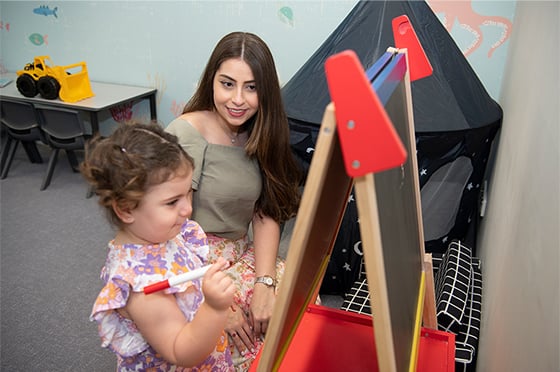
Senior Speech Pathologist Marisa Di Lorenzo looks at social communication and language outcomes for bilingual autistic children.

Senior Speech Pathologist Sally Grauaug looks at how to build the foundations of communication with your child.
Mankeeping was theorized as the unreciprocated labor women take on to compensate for losses in men’s social networks, thereby reducing the burden on families, heterosexual bonds, and men. However, there is currently no validated instrument that can reliably assess this theory.
Testing and treating symptomatic malaria cases is crucial for case management, but it may also prevent future illness by reducing mean infection duration. Measuring the impact of effective treatment on burden and transmission via field studies or routine surveillance systems is difficult and potentially unethical. This project uses mathematical modeling to explore how increasing treatment of symptomatic cases impacts malaria prevalence and incidence.

A Kimberley study seeking to better understand Strep A in remote settings is helping to guide new approaches to prevent acute rheumatic fever (ARF) – an auto-immune response that typically begins with a sore throat and causes high fever, tiredness and swollen joints.
Monthly intramuscular injections of benzathine penicillin G (BPG) remain the cornerstone of secondary prophylaxis for acute rheumatic fever and rheumatic heart disease (RHD). The barriers to successful delivery of BPG may be patient- or service-delivery-dependent.
To identify and characterise appropriate comparison groups for population studies of health outcomes in ART-conceived births: ovulation induction (OI), subfertile untreated and fertile natural conceptions. Our secondary objective was to examine whether known risks of pregnancy complications and adverse birth outcomes in ART births are elevated in comparison with subfertile (untreated and OI) conception groups.
SETBP1 Haploinsufficiency Disorder (SETBD) is characterised by mild to moderate intellectual disability, speech and language impairment, mild motor developmental delay, behavioural issues, hypotonia, mild facial dysmorphisms, and vision impairment. Despite a clear link between SETBP1 mutations and neurodevelopmental disorders the precise role of SETBP1 in neural development remains elusive.