
Search
Showing results for "early lung health"
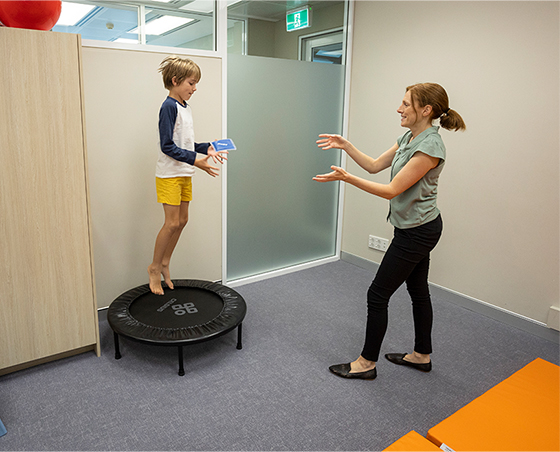
Developmental Coordination Disorder (DCD) is a neurodevelopmental condition that affects a child’s ability to learn and carry out everyday motor skills. An early and accurate assessment helps families and schools understand a child’s unique needs.

We know many autistic children may be more sensitive to transitions so may need some extra supports at this time.

In this blog, Senior Speech Pathologist Sally Grauaug and Speech Pathology Clinical Lead Aria May discuss how daily routines can facilitate the development of your child’s communication skills.

Discover resources and science activities for kids for the topic 'What's In Our Cells?'.

Want to find out more about what an excursion to The Kids is all about? Join us for our first ever Science & Sip!

Glycoprotein A as a biomarker of pulmonary infection and inflammation in children with cystic fibrosis Background: Serum Glycoprotein A (GlycA)
Protecting your privacy is important to us. This policy explains how The Kids Research Institute Australia collects, uses, and safeguards your personal information.
In Australia, Aboriginal children experience disproportionate rates of type 2 diabetes (T2D) compared with non-Aboriginal children. The aim of this qualitative study was to explore the experiences of Aboriginal adolescents with T2D and their family members to better understand the influences of T2D on self-management, with findings used to inform an enhanced service model of care.
Substantial progress has been made in reducing the burden of malaria in Africa since 2000, but those gains could be jeopardised if the COVID-19 pandemic affects the availability of key malaria control interventions. The aim of this study was to evaluate plausible effects on malaria incidence and mortality under different levels of disruption to malaria control.
This project aimed to investigate how schools provide support for the psychosocial wellbeing and disease management of students with type 1 diabetes