Skip to content
The Kids Research Institute Australia logo
Donate

No results yet

Search

Research

A Maximum Entropy Model of the Distribution of Dengue Serotype in Mexico

Pathogen strain diversity is an important driver of the trajectory of epidemics. The role of bioclimatic factors on the spatial distribution of dengue virus serotypes has, however, not been previously studied. Hence, we developed municipality-scale environmental suitability maps for the four dengue virus serotypes using maximum entropy modeling.

Research

Considerations for collecting and analyzing longitudinal data in observational cohort studies of transgender, non-binary, and gender diverse people

The health and well-being of transgender, non-binary, and gender-diverse people is receiving increasing attention from epidemiologists and public health researchers, including those utilizing longitudinal observational cohort studies.

Research

Microevolution and Its Impact on Hypervirulence, Antimicrobial Resistance, and Vaccine Escape in Neisseria meningitidis

Neisseria meningitidis is commensal of the human pharynx and occasionally invades the host, causing the life-threatening illness invasive meningococcal disease. The meningococcus is a highly diverse and adaptable organism thanks to natural competence, a propensity for recombination, and a highly repetitive genome.

News & Events

Jonathan Carapetis: The smart money is on backing West Aussie medical research

As a paediatrician and researcher, I witness on a daily basis the extraordinary benefits of Western Australian health and medical research to individual patients and the community.

News & Events

Opinion: Modelling for the health of our next generation

Nearly 170 years ago a British doctor applied geospatial mapping to identify the source of a cholera outbreak in central London. Using a street map to plot the location of the homes of the sick, Dr John Snow was able to pinpoint a ‘ground zero’ for the outbreak – a contaminated water pump.

News & Events

Joint Statement: New names reflect growing impact of Telethon and its beneficiaries

By mutual agreement with the Channel 7 Telethon Trust (Telethon), The Kids Research Institute Australia and Telethon Speech and Hearing will both rebrand in 2024.

Research

Development and temporal validation of a clinical prediction model of transition to psychosis in individuals at ultra-high risk in the UHR 1000+ cohort

The concept of ultra-high risk for psychosis (UHR) has been at the forefront of psychiatric research for several decades, with the ultimate goal of preventing the onset of psychotic disorder in high-risk individuals. Orygen (Melbourne, Australia) has led a range of observational and intervention studies in this clinical population.

Research

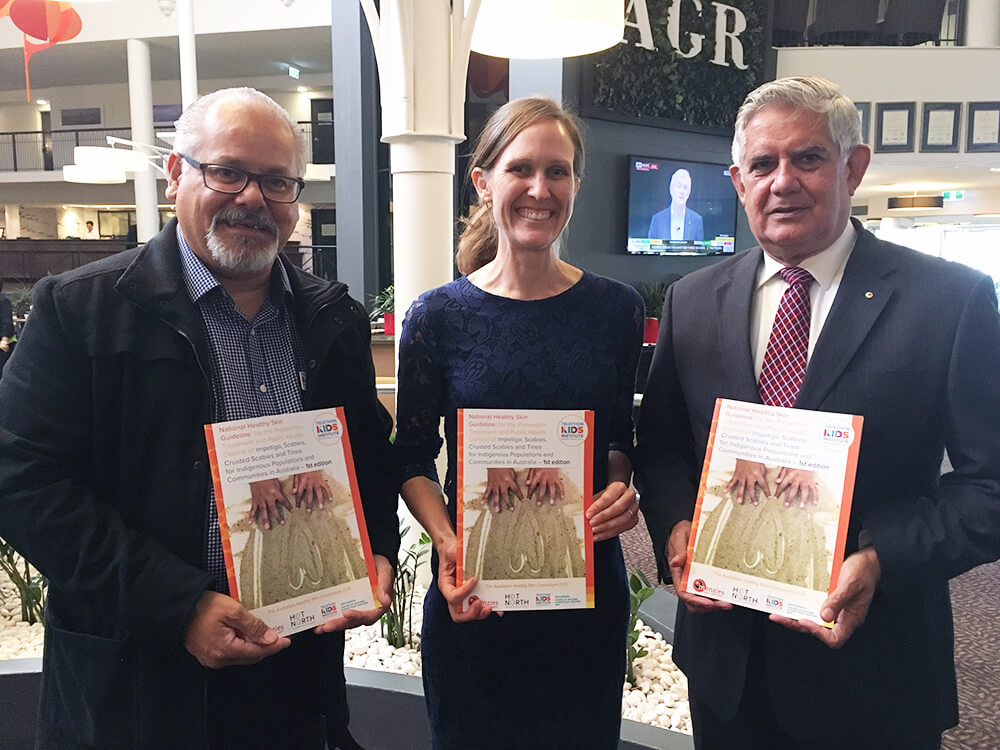
Multi-methods process evaluation of the SToP (See, Treat, Prevent) trial: a cluster randomised, stepped wedge trial to support healthy skin

Healthy skin is important for maintaining overall physical and cultural health and wellbeing. However, remote-living Australian Aboriginal children contend with disproportionally high rates of Streptococcus pyogenes (Strep A) infected impetigo. 

Research

NEARER SCAN (LENO BESIK) evaluation of a task-sharing echocardiographic active case finding programme for rheumatic heart disease in Australia and Timor-Leste

Rheumatic heart disease (RHD) is underdiagnosed globally resulting in missed treatment opportunities and adverse clinical outcomes. We describe the protocol for a study which aims to co-design, implement and conduct an evaluation of a task-sharing approach to echocardiographic active case finding for early detection and management of RHD in high-risk settings in Australia and Timor-Leste.

Research

Key elements of Goal-Directed Training for children with cerebral palsy: A qualitative content analysis

Goal-directed training is an evidence-based occupational therapy intervention for children with cerebral palsy targeting motor performance and goal attainment. There is variability and limited description on goal-directed training delivery within the studies who found it a successful intervention. The aim of this study was to establish the who, what, why and how of goal directed training according to practicing occupational therapists.