Skip to content

Search

The ORIGINS Project: A platform for research discovery

The ORIGINS Project is a decade-long longitudinal study of more than 18,000 individuals including mothers, partners and children, as part of a collaboration between The Kids Research Institute Australia and Joondalup Health Campus.

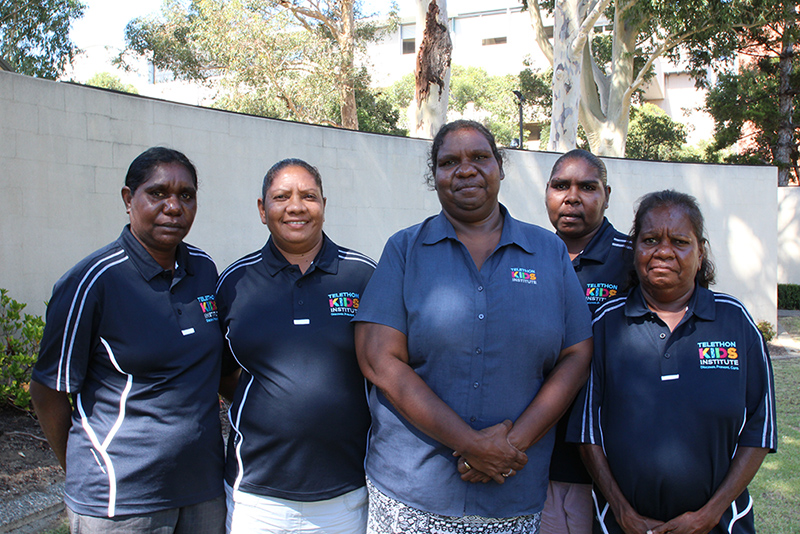
Campaign designed to improve the lung health of Aboriginal children

A public health campaign to raise awareness about the dangers of chronic wet cough in Aboriginal children is helping to improve detection, diagnosis and management of the condition.

Cerebral Palsy

A non-progressive motor disability due to damage of the developing brain, this is the most common physical disability in childhood. Affecting about one in 500 babies, it is frequently accompanied by other neurological impairments, such as intellectual or sensory.

Bullying Infographics

Infographics to easily learn more about bullying and what actions to take should bullying be an issue in your school or community.

IVF

In Vitro Fertilisation (IVF) is an Assisted Reproductive Technology (ART) in which an egg is fertilised by sperm outside the body.

Allergen Specific IgE is a Stronger Predictor of Remission Following Peanut Oral Immunotherapy Than Age in Children Aged 1–10 Years

Remission is the desired outcome following OIT as it allows individuals to discontinue treatment and eat the allergen freely. Early initiation of OIT in infants and toddlers has been embraced as an approach to increase the likelihood of remission. However, there is no high-quality evidence supporting younger age as an independent factor driving remission; available studies are limited by small samples of younger subjects and lack of adjustment for confounding covariates, particularly peanut-specific IgE (sIgE) levels which is closely cor

Inclusion of genital, sexual, and gender diversity in human reproductive teaching: impact on student experience and recommendations for tertiary educators

Western societal norms have long been constrained by binary and exclusionary perspectives on matters such as infertility, contraception, sexual health, sexuality, and gender. These viewpoints have shaped research and knowledge frameworks for decades and led to an inaccurate and incomplete reproductive biology curriculum. To combat these deficiencies in reproductive systems-related education, our teaching team undertook a gradual transformation of unit content from 2018 to 2023, aiming to better reflect real diversity in human reproductive biology.

Realising the potential impact of artificial intelligence for rare diseases – A framework

Rare diseases (RD) are conditions affecting fewer than 1 in 2000 persons, with over 7000 largely genetic RDs affecting 3.5 %-5.9 % of the global population, or approximately 262.9–446.2 million people. The substantial healthcare burden and costs, such as the $1 trillion annual expense in the USA, highlight the urgent need for improved RD management. The International Rare Diseases Research Consortium (IRDiRC) addresses this need through global collaboration, aiming for timely and accurate diagnosis, development of 1000 new therapies, and methodologies to measure impact by 2027.

Rewiring endogenous genes in CAR T cells for tumour-restricted payload delivery

The efficacy of chimeric antigen receptor (CAR) T cell therapy in solid tumours is limited by immunosuppression and antigen heterogeneity. To overcome these barriers, 'armoured' CAR T cells, which secrete proinflammatory cytokines, have been developed. However, their clinical application has been limited because of toxicity related to peripheral expression of the armouring transgene. 

The usability and feasibility of a self-compassion chatbot (COMPASS) for youth living with type 1 diabetes

Although it is well established that youth with type 1 Diabetes (T1D) experience high rates of distress, current clinical care is often under-resourced and unable to provide sufficient or timely psychological support. The current study was designed to evaluate the safety, usability and feasibility of 'COMPASS,' a self-compassion chatbot intervention.