Skip to content

Search

Facilitators, barriers, and strategies for supporting shared decision-making with people with intellectual disability: A West Australian primary healthcare professional perspective

Shared decision-making between patients and primary healthcare professionals positively impacts health outcomes. However, people with intellectual disability face additional barriers and require supported shared decision-making (SSDM) to participate. Little is known about how healthcare professionals use SSDM with this population. This paper explores the facilitators and barriers experienced, and strategies/resources employed by healthcare professionals working with people with intellectual disability.

Bringing optimised COVID-19 vaccine schedules to immunocompromised populations: statistical elements and design

Bringing optimised coronavirus disease 2019 (COVID-19) vaccine schedules to immunocompromised populations (BOOST-IC) is a multi-site, adaptive platform trial designed to assess the effect of different booster vaccination schedules in the Australian immunocompromised population on the immunogenicity, safety and cross-protection against COVID-19 caused by severe acute respiratory syndrome coronavirus 2 (SARS-CoV-2) and its variants. 

Impact of climate change on diarrhoea risk in low- and middle-income countries

Diarrhoea remains a leading cause of mortality among children under five years of age, with over 99 % of deaths occurring in low- and middle-income countries. Poor water quality, inadequate sanitation, poverty, undernutrition, and limited healthcare access contribute to this lingering problem, together with emerging environmental stressors driven by climate change.

‘Beyond core business’: A qualitative review of activities supporting environmental health within remote Western Australian schools

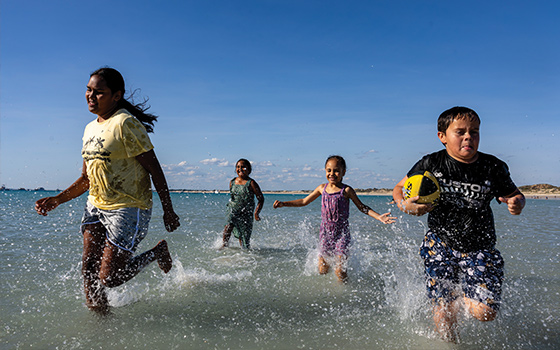
Aboriginal children and families contend with higher rates of preventable infectious diseases that can be attributed to their immediate living environment. The environments in which children spend most of their time are their homes and schools. We aimed to understand the opportunities in the school setting to support student skin health and wellbeing through environmental health activities, how these activities were completed, and the barriers to their implementation.

Infectious disease outcomes associated with inadequate housing and access to healthy living practices in Australia: a systematic review

Inadequate housing and living conditions underpin significant health and wellbeing inequality in Australia, particularly for Indigenous people. This review aimed to define infectious disease (ID) outcomes used to measure the health impact of inadequate housing in Australia within a research context.

Group mindful self-compassion training to improve mental health outcomes for gender and sexually diverse young adults

This study investigated the effects of Mindful Self-Compassion (MSC) training on the mental health of gender and sexually diverse young adults (aged 18–25 years) in Australia. A single-blind randomized controlled trial was conducted in 2020–2022 comparing an online-delivered 8-week group MSC training program with a waitlist control.

Exploring sleep challenges in CDKL5 Deficiency Disorder

Sleep disturbance is a common and significant issue for individuals with CDKL5 Deficiency Disorder (CDD) and their families. The study aimed to investigate experiences of sleep disturbance in CDD and associated factors.

Addressing the challenges of intellectual disability identification for health policy and research in Australia

This article discusses the important issue of the need for a stable definition of intellectual disability in order to allow comparisons by place and over time such as in the monitoring of this population's health needs and utilization. The aim of the new Australian National Centre for Intellectual Disability Health, established in 2023, is to ensure that all Australian children and adults with intellectual disability receive high-quality healthcare that meets their needs.

Educational pathways and earnings trajectories of second-generation immigrants in Australia: New insights from linked census-administrative data

This study employs 2011 Census data linked to population-based administrative datasets to explore disparities in educational attainment and earnings trajectories among Australian-born children of diverse parental migration backgrounds from mid-adolescence to early adulthood. 

Inoculation Theory and Sport, Exercise, and Physical Activity

Movement is at the core of human existence. For infants and children, exploratory movement offers a scaffold for important learning and development outcomes, and in adolescents and adults, regular activity is key for promoting good physical and mental health.