
Search
Showing results for "early lung health"

The Kids Research Institute Australia has secured a State Government grant to prepare a nasal therapy designed to prevent childhood ear infections for a world-first clinical trial.

CliniKids has won the Allied Health Professionals category at the Western Australian Disability Support Awards, announced at Crown Perth on the weekend.

Clinicians across Australia are looking forward to the release of the country’s first national guidelines for the diagnosis of autism.
Acute lower respiratory tract infection (ALRI) remains a major worldwide cause of childhood mortality, compelling innovation in prevention and treatment. Children in Papua New Guinea (PNG) experience profound morbidity from ALRI caused by Streptococcus pneumoniae. As a result of evolutionary divergence, the human PNG population exhibits profound genetic variation and diversity. To address unmet health needs of children in PNG, we tested whether genetic variants increased ALRI morbidity.
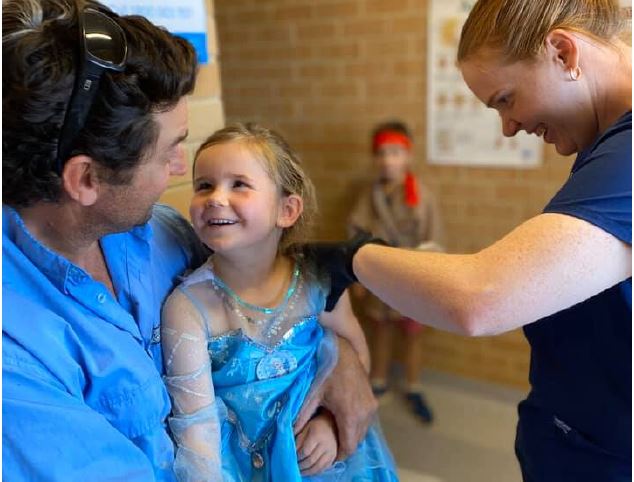
Infectious disease researchers who used a decade of scientific evidence to advocate for a nationwide childhood influenza immunisation policy have earned a finalist position at the country’s most prestigious science awards – the Australian Museum Eureka Prizes.

An international study examining Covid-19 severity on hospitalised children and adolescents has found that as the virus became more infectious, intensive care admissions dropped across multiple age groups regardless of vaccination status.
The purpose of this study was to investigate whether antecedent hypoglycaemia impairs the glycaemia-raising effect of a 10 s sprint in individuals with type...
Multiple sclerosis (MS) is a devastating neurological disease that predominantly affects young adults resulting in severe personal and economic impact.
The outcome for children with high-grade gliomas (HGG) remains dismal, with a 2-year survival rate of only 10% to 30%.
We hypothesized that reactivation of p53 by inhibition of its negative regulator will result in p53-mediated growth arrest and apoptosis.