
Search
Showing results for "early lung health"

A legal change fought for by The Kids, consumer advocates, and others within the health sector – and hastened by the COVID-19 crisis – has brought WA into line with the rest of Australia, allowing critically ill or incapacitated patients access to potentially life-saving clinical trials.
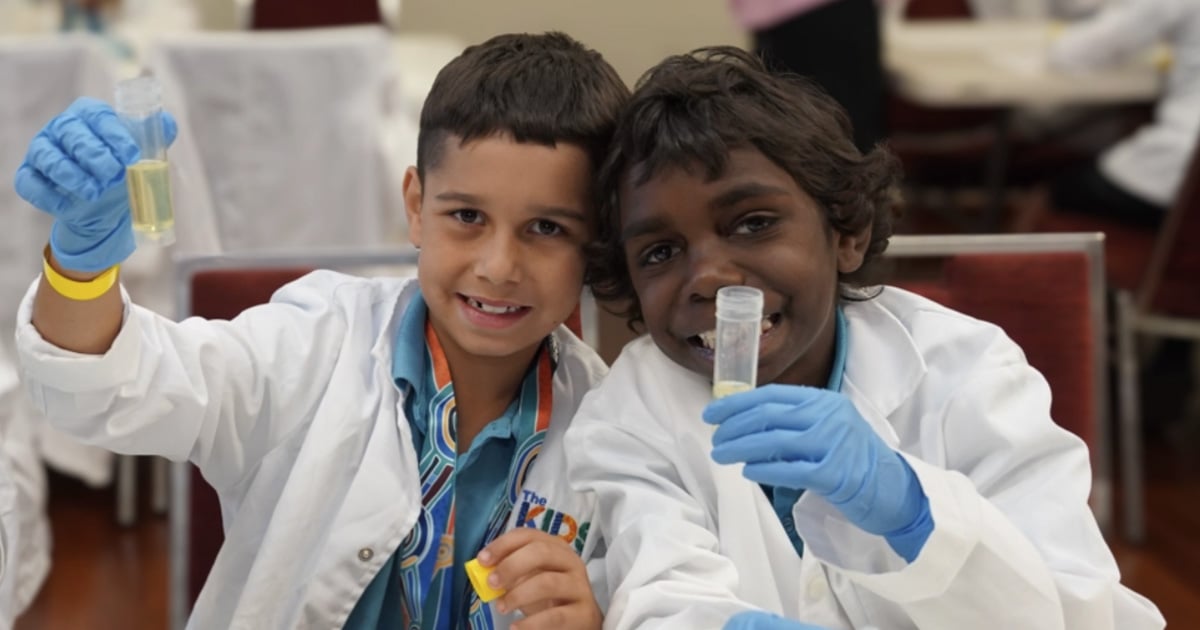
The Broome Civic Centre recently turned into a buzzing hub of discovery as The Kids Research Institute Australia proudly presented the 2025 Broome STEM Festival.

The Kids Research Institute Australia will return to the Kimberley in May for the Broome STEM Festival, promising two fun-filled days of hands-on science activities for local families to experience.

The CMVictory Study aims to learn more about the safety and effectiveness of a potential CMV vaccine.
Rishi S. Kotecha MB ChB (Hons) MRCPCH FRACP PhD Co-Head, Leukaemia Translational Research rishi.kotecha@health.wa.gov.au Co-Head, Leukaemia
The RNA-binding protein IGF2BP3 is an oncofetal protein overexpressed in B-acute lymphoblastic leukemia and is critical for leukemogenesis in experimental models. With cancerspecific expression, functional dispensability for normal development, and an unleveraged prooncogenic function in mRNA homeostasis, IGF2BP3 represents an excellent target.
ETV6::RUNX1 is one of the most common recurrent genomic abnormalities in acute lymphoblastic leukaemia (ALL) and is associated with a good prognosis. High expression of NTRK1, encoding tropomyosin receptor kinase A (TrkA), confers a poor prognosis in other malignancies and may contribute to therapy resistance in patients with ETV6::RUNX1 B-ALL.
Acute lymphoblastic leukaemia (ALL) is the most common paediatric malignancy and remains one of the most common causes of cancer-related death in children and adolescents. Five-year overall survival rates now exceed 90% with current multidrug chemotherapeutic regimens.
Acute lymphoblastic leukaemia is the most common childhood malignancy that remains a leading cause of death in childhood. It may be characterised by multiple known recurrent genetic aberrations that inform prognosis, the most common being hyperdiploidy.
Children receiving treatment for acute myeloid leukemia (AML) are at high risk of invasive fungal disease (IFD). Evidence from pediatric studies support the efficacy of antifungal prophylaxis in reducing the burden of IFD in children receiving therapy for AML, yet existing antifungal agents have specific limitations and comparative data to inform the optimal prophylactic approach are lacking.