
Search
Showing results for "early lung health"
Increases in invasive group A streptococcal disease (iGAS) have recently been reported in multiple countries in the northern hemisphere, occurring during, and outside of, typical spring peaks. We report the epidemiology of iGAS among children in Australia from 1 July 2018 to 31 December 2022.
B-cell acute lymphoblastic leukaemia (B-ALL) is characterised by diverse genomic alterations, the most frequent being gene fusions detected via transcriptomic analysis (mRNA-seq). Due to its hypervariable nature, gene fusions involving the Immunoglobulin Heavy Chain (IGH) locus can be difficult to detect with standard gene fusion calling algorithms and significant computational resources and analysis times are required. We aimed to optimize a gene fusion calling workflow to achieve best-case sensitivity for IGH gene fusion detection.
Symptomatic methotrexate-related central neurotoxicity (MTX neurotoxicity) is a severe toxicity experienced during acute lymphoblastic leukemia (ALL) therapy with potential long-term neurologic complications. Risk factors and long-term outcomes require further study.
The current framework for testing and regulating vaccines was established before the realization that vaccines, in addition to their effect against the vaccine-specific disease, may also have "non-specific effects" affecting the risk of unrelated diseases. Accumulating evidence from epidemiological studies shows that vaccines in some situations can affect all-cause mortality and morbidity in ways that are not explained by the prevention of the vaccine-targeted disease.
T-cell lymphoblastic lymphoma (T-LBL) is a rare and aggressive lymphatic cancer, often diagnosed at a young age. Patients are treated with intensive chemotherapy, potentially followed by a hematopoietic stem cell transplantation. Although prognosis of T-LBL has improved with intensified treatment protocols, they are associated with side effects and 10-20% of patients still die from relapsed or refractory disease. Given this, the search toward less toxic anti-lymphoma therapies is ongoing.
Infant MLL-AF4-driven acute lymphoblastic leukemia (ALL) is a devastating disease with dismal prognosis. A lack of understanding of the unique biology of this disease, particularly its prenatal origin, has hindered improvement of survival. We perform multiple RNA sequencing experiments on fetal, neonatal, and adult hematopoietic stem and progenitor cells from human and mouse.
Outcomes for infants diagnosed under 1 year of age with KMT2A-rearranged acute lymphoblastic leukemia (ALL) have remained stagnant over the past 20 years. Successive treatment protocols have previously focused on intensification of conventional chemotherapy, but increased treatment-related toxicity and chemoresistance have led to a plateau in survival.
IgE antibodies in house dust mite (HDM) allergy follow a predictable pattern. Half are directed against two dominant allergens and the remainder largely against
This review aims to systematically identify and summarise the effects of different antifungal therapies in children with proven, probable or suspected...
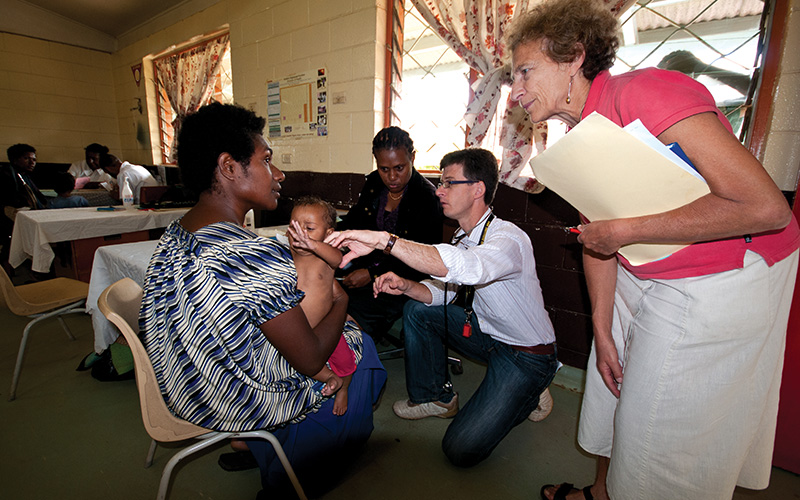
New research has revealed the extraordinary impact of a collaborative project between The Kids Research Institute Australia and the Papua New Guinea Institute of Medical Research, with rates of hospitalisation for pneumonia dropping by nearly 60 per cent thanks to the introduction of the pneumococcal vaccine