
Search
Showing results for "Childhood interstitial lung disease "
Research suggests that offspring of mothers who experience high levels of stress during pregnancy are more likely to have problems in neurobehavioral...
Diagnostic irradiation of the mother during pregnancy increases the risk of childhood acute lymphoblastic leukemia
One of the major challenges in health studies with a spatial dimension is to produce valid and meaningful geographical representations of risk.

A new collaboration has been launched to fast track research into action to improve outcomes in the crucial early years of child development and learning.
A core story translates scientific or expert knowledge to make it accessible to the public, practitioners, and policymakers.

The Metabolomics to Predict Asthma (MAP) study has reached an important turning point. After examining the ‘chemical fingerprints’ of more than 300 children, the team is now taking a new approach, turning to proteins to better understand which young children with recurrent wheeze go on to develop asthma.

Co-Head, Foundations of Lung Disease
This study found rhinovirus infection drives necrotic cell death in cystic fibrosis airway epithelial cells
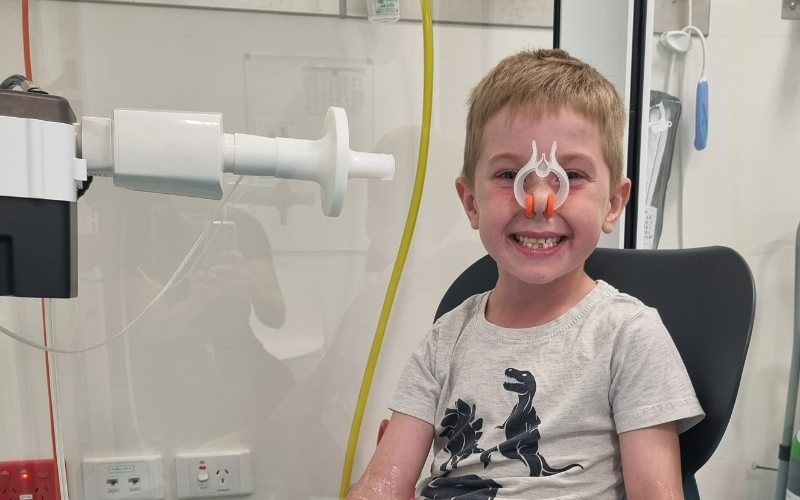
A new study to determine if it’s safe for children who were born preterm to attend day care officially commenced this month.
The epithelium is integral to the protection of many different biological systems and for the maintenance of biochemical homeostasis. Emerging evidence suggests that particular children have epithelial vulnerabilities leading to dysregulated barrier function and integrity, that resultantly contributes to disease pathogenesis.