
Search
Showing results for "early lung health"
Conventional vaccine design has been based on trial-and-error approaches, which have been generally successful. However, there have been some major failures in vaccine development and we still do not have highly effective licensed vaccines for tuberculosis, HIV, respiratory syncytial virus, and other major infections of global significance. Approaches at rational vaccine design have been limited by our understanding of the immune response to vaccination at the molecular level. Tools now exist to undertake in-depth analysis using systems biology approaches, but to be fully realized, studies are required in humans with intensive blood and tissue sampling.
Cancer cells display DNA hypermethylation at specific CpG islands in comparison to their normal healthy counterparts, but the mechanism that drives this so-called CpG island methylator phenotype (CIMP) remains poorly understood. Here, we show that CpG island methylation in human T-cell acute lymphoblastic leukemia (T-ALL) mainly occurs at promoters of Polycomb Repressor Complex 2 (PRC2) target genes that are not expressed in normal or malignant T-cells and which display a reciprocal association with H3K27me3 binding.
Structural and numerical alterations of chromosome 21 are extremely common in hematological malignancies. While the functional impact of chimeric transcripts from fused chromosome 21 genes such as TEL-AML1, AML1-ETO, or FUS-ERG have been extensively studied, the role of gain of chromosome 21 remains largely unknown.
Children with Down syndrome (constitutive trisomy 21) that develop acute lymphoblastic leukemia (DS-ALL) have a 3-fold increased likelihood of treatment-related mortality coupled with a higher cumulative incidence of relapse, compared with other children with B-cell acute lymphoblastic leukemia (B-ALL).
IL7 and glucocorticoids coordinately drive aberrant activation of PIM1 and suggests that T-ALL and T-LBL patients could benefit from PIM inhibition
Acute leukemia continues to be a major cause of death from disease worldwide and current chemotherapeutic agents are associated with significant morbidity in survivors. While better and safer treatments for acute leukemia are urgently needed, standard drug development pipelines are lengthy and drug repurposing therefore provides a promising approach.
Patients whose leukemias harbor a rearrangement of the Mixed Lineage Leukemia (MLL/KMT2A) gene have a poor prognosis, especially when the disease strikes in infants. The poor clinical outcome linked to this aggressive disease and the detrimental treatment side-effects, particularly in children, warrant the urgent development of more effective and cancer-selective therapeutics.
Cancer cells are addicted to polyamines, polycations essential for cellular function. While dual targeting of cellular polyamine biosynthesis and polyamine uptake is under clinical investigation in solid cancers, preclinical and clinical studies into its potential in haematological malignancies are lacking. Here we investigated the preclinical efficacy of polyamine depletion in acute leukaemia.
Extensive research over the past 50 years has resulted in significant improvements in survival for patients diagnosed with leukemia. Despite this, a subgroup of patients harboring high-risk genetic alterations still suffer from poor outcomes. There is a desperate need for new treatments to improve survival, yet consistent failure exists in the translation of in vitro drug development to clinical application.
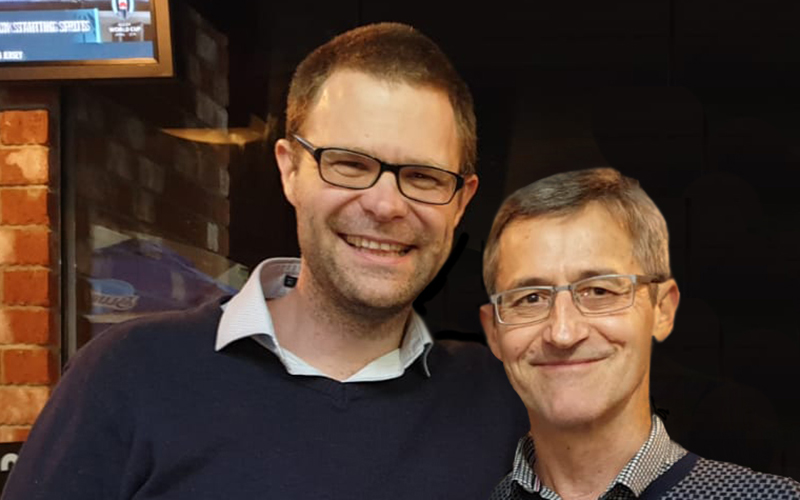
Director of CliniKids, Professor Andrew Whitehouse, and Professor Murray Maybery, have been identified as the world’s most frequent autism research collaborators of the decade.