
Search
This study aimed to examine friendship networks and social support outcomes for mothers according to patterns of playgroup participation.
This study provides evidence that continued participation in playgroups is associated with better outcomes for children from disadvantaged families.
Physical inactivity in childhood is a major public health issue. Dog ownership has been widely reported to lead to greater physical activity in adults and school-aged children. We examined if dog ownership and dog-facilitated physical activity were associated with higher physical activity in preschoolers. Secondary analysis of the 'Play Spaces & Environments for Children's Physical Activity' (PLAYCE, 2015-2018) study involving 1366, 2-5-year-olds from 122 long day-care centres in Perth, Australia was conducted.
Early childhood education and care (ECEC) services are a key setting to support improvements in the physical activity of young children. This umbrella review gathered and synthesised systematic review evidence of the effectiveness of interventions in the ECEC setting on the physical activity levels of children aged 0–6.
Early childhood is a critical window for preventing obesity and chronic disease. Yet, 1 in 4 Australian children aged 5 years and under are affected by overweight or obesity; and significant proportions of children under 5 years fail to meet guidelines for diet quality, physical activity (PA), screen time, and sleep.
A single-blind randomised control trial investigated the effectiveness of the Learn, Engage and Play (LEaP) playgroup. Seventy-one children with developmental delay were randomly allocated to an 8-week LEaP playgroup or control group and followed up at 12 and 28 weeks.
Playgroups are community-based programs for children and families aiming to improve child outcomes, enhance family and community networks and increase parenting capacity. Despite the prevalence of playgroups in Australian communities there is a lack of research clearly articulating the key components of playgroups, specifically from the perspective of parents attending these groups.
To investigate the associations between interpregnancy intervals (IPIs) and developmental vulnerability in children's first year of full-time school (age 5). A retrospective cohort study using logistic regression. ORs were estimated for associations with IPIs with adjustment for child, parent and community sociodemographic variables.
Tasmania’s child and family centres users made more use of early childhood services than did non-users
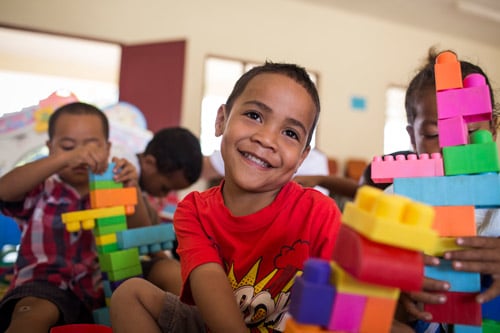
In Australia, community playgroups are seen as the ‘soft touch’. But a research project in Tonga is finding the benefits can last a lifetime.