Skip to content

Search

First Nations Health and Equity

Aboriginal health is everyone's business. The needs of Aboriginal and Torres Strait Islander families and kids is integrated into all relevant areas of our work. Improving the health and wellbeing of Aboriginal and Torres Strait Islander kids and families is an overarching priority for every team at The Kids.

Missed Opportunities for Diagnosing Acute Rheumatic Fever

We have read with interest the new publication by Rouhiainen and colleagues on missed opportunities for preventing or diagnosing acute rheumatic fever (ARF).

The growth of rural and remote Aboriginal and Torres Strait Islander community laundries: an integrative scoping review

This article documents the establishment of community laundries in rural/remote Aboriginal and Torres Strait Islander communities between 2000-2024, with the aim to support synergistic planning, implementation and evaluation. 

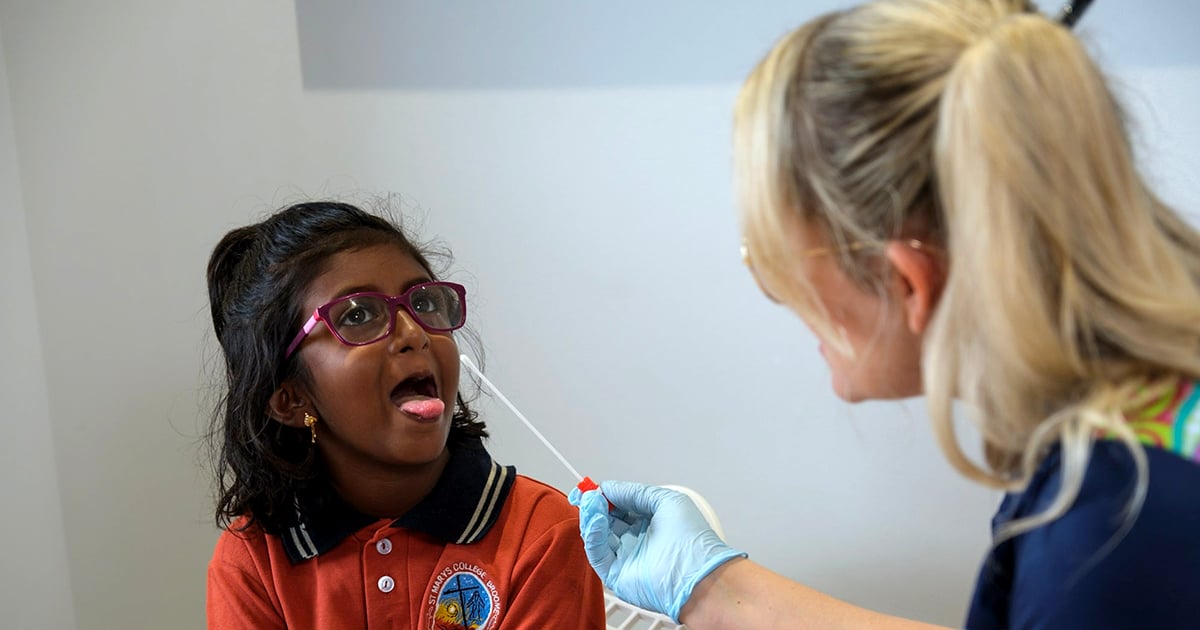
The value of molecular point-of-care testing for Group A Streptococcal pharyngitis in a remote, non-clinical Australian setting

Group A Streptococcal (GAS) pharyngitis is an important precursor infection to severe complications including rheumatic fever and invasive GAS. Rapid molecular point of care testing (POCT) for GAS infection has advantages over traditional microbiological culture, especially in settings with limited or absent laboratory infrastructure and where GAS complications predominate.

Acute Rheumatic Fever Diagnostic Network (ARC Network) clinical recruitment protocol

Rheumatic heart disease, a major cause of morbidity and mortality in low- and middle-income countries, results from acute rheumatic fever (ARF), for which no diagnostic test currently exists. The ARF Diagnosis Collaborative Network (ARC Network) was established to address this gap by recruiting a rigorously phenotyped, globally representative cohort of children and adolescents with ARF and controls to support biomarker discovery.

The potential global cost-effectiveness of prospective Strep A vaccines and associated implementation efforts

Group A Streptococcus causes a wide range of diseases from relatively mild infections including pharyngitis to more severe illnesses such as invasive diseases and rheumatic heart disease (RHD). Our aim is to estimate the cost-effectiveness of a hypothetical Strep A vaccine on multiple disease manifestations at the global-level.

Left ventricular remodelling in rheumatic heart disease – trends over time and implications for follow-up in childhood

Rheumatic heart disease (RHD) is the most common form of acquired heart disease worldwide. In RHD, volume loading from mitral regurgitation leads to left ventricular (LV) dilatation, increased wall stress, and ultimately LV dysfunction. Improved understanding of LV dynamics may contribute to refined timing of intervention.

Subcutaneous infusion of high-dose benzathine penicillin G is safe, tolerable, and suitable for less-frequent dosing for rheumatic heart disease secondary prophylaxis: a phase 1 open-label population pharmacokinetic study

Since 1955, the recommended strategy for rheumatic heart disease secondary prophylaxis has been benzathine penicillin G injections administered intramuscularly every 4 weeks. Due to dosing frequency, pain, and programmatic challenges, adherence is suboptimal. It has previously been demonstrated that BPG delivered subcutaneously at a standard dose is safe and tolerable and has favorable pharmacokinetics, setting the scene for improved regimens with less frequent administration.

Morbidity of Scabies in Resource-Limited Countries: Rheumatic Heart Disease (RHD) and Post-Streptococcal Glomerulonephritis (APSGN)

Scabies is one of the world’s most prevalent diseases, with approximately 147 million cases at any one time and an estimated annual incidence of 455 million new episodes. Although Group A streptococcal (GAS) pharyngitis has long been implicated in the pathogenesis of acute rheumatic fever (ARF) and subsequent rheumatic heart disease (RHD), impetigo caused by GAS has recently been postulated as a link between scabies and the pathogenesis of ARF.