
Search
Anya Deborah Pat Jones Strickland Holt BSc MSc PhD PhD PhD, DSc, FRCPath, FRCPI, FAA Honorary Research Associate Head, Pregnancy and Early Life
Alexander Anthony Deborah Pat Larcombe Kicic Strickland Holt BScEnv (Hons) PhD BSc (Hons) PhD PhD PhD, DSc, FRCPath, FRCPI, FAA Honorary Research

Honorary Research Associate
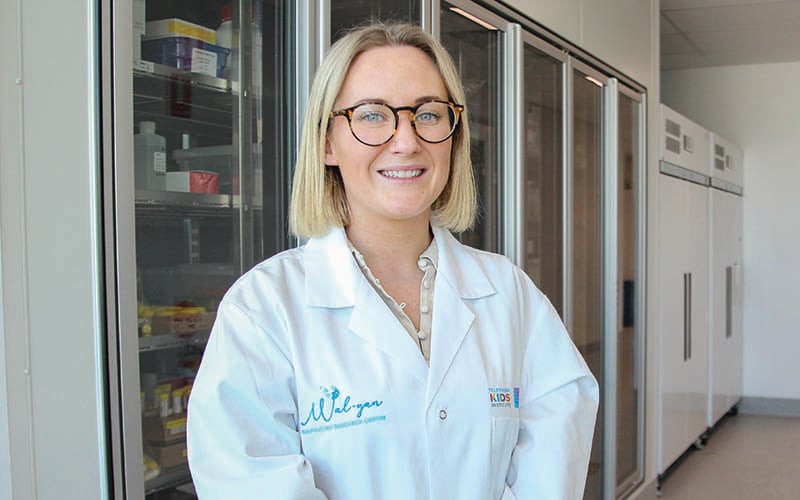
Researchers have made a world-first discovery on how to prevent severe respiratory infections in babies.
Results from recent clinical studies suggest potential efficacy of immune training (IT)-based approaches for protection against severe lower respiratory tract infections in infants, but underlying mechanisms are unclear.
The immunological changes underpinning acquisition of remission (also called sustained unresponsiveness) following food immunotherapy remain poorly defined. Limited access to effective therapies and biosamples from treatment responders has prevented progress. Probiotic peanut oral immunotherapy is highly effective at inducing remission, providing an opportunity to investigate immune changes.
Human rhinovirus (RV)-induced exacerbations of asthma and wheeze are a major cause of emergency room presentations and hospital admissions among children. Previous studies have shown that immune response patterns during these exacerbations are heterogeneous and are characterized by the presence or absence of robust interferon responses.
Immunotherapy has revolutionised the treatment of cancers by exploiting the immune system to eliminate tumour cells. Despite the impressive response in a proportion of patients, clinical benefit has been limited thus far.
Incomplete maturation of immune regulatory functions at birth is antecedent to the heightened risk for severe respiratory infections during infancy. Our forerunner animal model studies demonstrated that maternal treatment with the microbial-derived immune training agent OM-85 during pregnancy promotes accelerated postnatal maturation of mechanisms that regulate inflammatory processes in the offspring airways.
T-cell activation induces context-specific gene expression programs that promote energy generation and biosynthesis, progression through the cell cycle and ultimately cell differentiation. The aim of this study was to apply the omni ATAC-seq method to characterize the landscape of chromatin changes induced by T-cell activation in mature naïve CD4+ T-cells.