
For most people, a diagnosis is a starting point. For families living with an undiagnosed disease, it can be the destination they may never reach.
An estimated 350 million people worldwide live with a rare disease, and around 60 per cent remain without a diagnosis. Without a name for what their child is experiencing, families have no clear treatment pathway, no prognosis, no access to genetic counselling, and often no entry to the support systems a diagnosis can unlock.
The search for answers can take several years. For some, it never ends.
In 2026, Rare Disease Day is recognised on 28 February to raise awareness and generate change for people living with rare disease, their families and carers worldwide. This year’s global theme, More than you can imagine, highlights the immense impact of rare disease on families across the world.
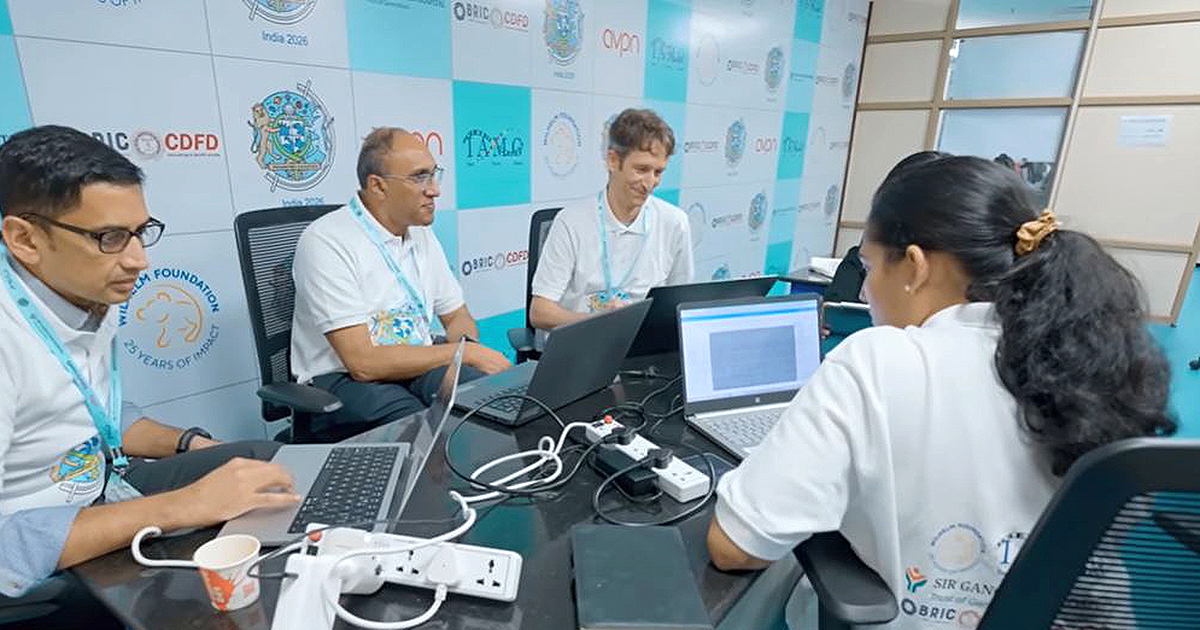
Dr Timo Lassmann, Head of the Precision Health Theme at The Kids, was invited to India to participate in Asia’s first Undiagnosed Hackathon, held in Hyderabad.
The Undiagnosed Hackathon, a global initiative led by the Wilhelm Foundation, brings together more than 100 experts from 10 countries to work intensively on 25 complex, unsolved cases.
“The Hackathon is a way of gathering clinicians and experts in AI and genomics to tackle extremely difficult cases that have evaded diagnosis for up to six years,” Dr Lassmann said.
Families travelled from across India, from Maharashtra, Uttar Pradesh, Jammu and Kashmir and Telangana, carrying years of medical records and unanswered questions. Some had been searching for a diagnosis for their child since birth.
Genomic sequencing data, transcriptome data and detailed clinical histories are laid out and interrogated collectively. Fresh perspectives, diverse expertise and protected time are focused entirely on one goal: finding an answer.
When a diagnosis is made, a bell is rung. It has become the defining symbol of these events, not a celebration of speed, but of persistence, collaboration and what it means for one family to finally know.
Over two days, the bell rang seven times.
Seven families who had spent years searching received an answer. For the remaining cases, the work continues. Data remains open for reanalysis, and teams stay connected in the months that follow.
“It was a privilege to be in that room,” Dr Lassmann said.
“You are sitting next to a family who has been searching for answers for years, and that completely changes how you approach the science. It is not abstract. It is a child. It is their parents. When the bell rings, the room stops.”
The Hackathon would not have been possible without the support with Sir Ganga Ram Hospital, the Centre for DNA Fingerprinting and Diagnostics (CDFD), the Society for Indian Academy of Medical Genetics and the Asian Venture Philanthropy Network (AVPN).
About Dr Timo Lassmann
Since joining The Kids in 2014, Dr Lassmann has pioneered the use of large-scale ‘omics’ datasets to speed up diagnosis and reveal hidden biological mechanisms in childhood cancers and rare diseases. His team is focused on creating a world-class precision health program that leverages AI to integrate complex data and provide real-time clinical support, transforming both discovery and patient care.