
Search
Showing results for "Childhood interstitial lung disease "
An exciting opportunity to work in the Children's Lung Health research team to improve lung health in children and young people.
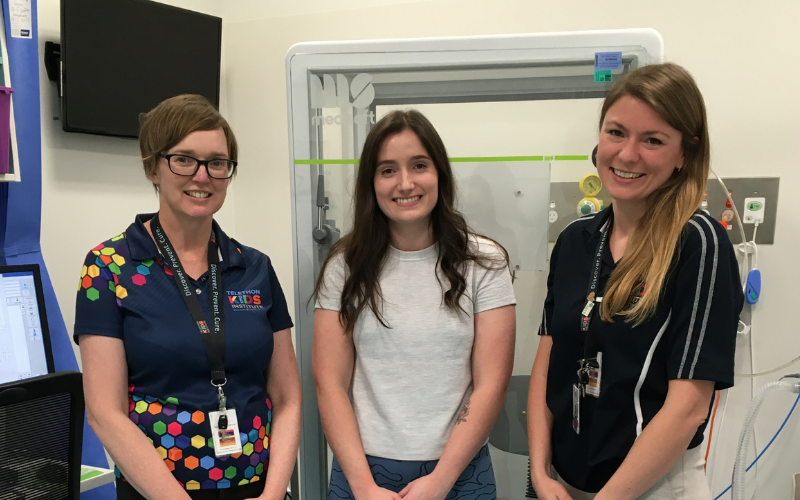
A study which set out to determine ways to predict the long-term lung health of young adults born very preterm has shown that a childhood history of respiratory hospital admission should be a key consideration in the management of preterm children and adults.
Urinary tract infection (UTI) is common in children, causes them considerable discomfort, as well as distress to parents and has a tendency to recur.
This study will conduct a detailed lung health assessment in a follow-up of a group of preterm individuals at 19 years of age.
In disease settings, vitamin D may be important for maintaining optimal lung epithelial integrity and suppressing inflammation, but less is known of its effects prior to disease onset.
The prevalence of vitamin D deficiency is increasing and has been linked to obstructive lung diseases including asthma and chronic obstructive pulmonary disease
Reviewed in this article these studies have identified positive association at 21 genes with association at five of these replicated in independent populations.
Early life lower respiratory tract illness impairs lung function at 1 year, independent of baseline lung function
The interleukin (IL)-6 family of cytokines and exaggerated signal transducer and activator of transcription (STAT)3 signaling is implicated in idiopathic pulmonary fibrosis (IPF) pathogenesis, but the mechanisms regulating STAT3 expression and function are unknown. Suppressor of cytokine signaling (SOCS)1 and SOCS3 block STAT3, and low SOCS1 levels have been reported in IPF fibroblasts and shown to facilitate collagen production. Fibroblasts and lung tissue from IPF patients and controls were used to examine the mechanisms underlying SOCS1 down-regulation in IPF.
The relative importance of respiratory viral infections vs inhalant allergy in asthma pathogenesis is the subject of ongoing debate.