
Search
Showing results for "8"
Through InterRett we collect information on individuals with Rett syndrome on a global level. If you are a participant you can complete your questionnaire here.

Identifying pediatric lung disease: A comparison of forced oscillation technique outcomes Abstract Rationale Increasing evidence suggests the forced
As a not-for profit child health research organisation we rely on the generosity of our partners, communities and supporters to improve the health, development and lives of children through excellence in research.
Your generosity creates a significant impact on our research and on the lives of children everywhere

Are you pregnant, a parent or a carer of a child aged 0 to 8 years and live in Western Australia? Help us deliver a new early years app.
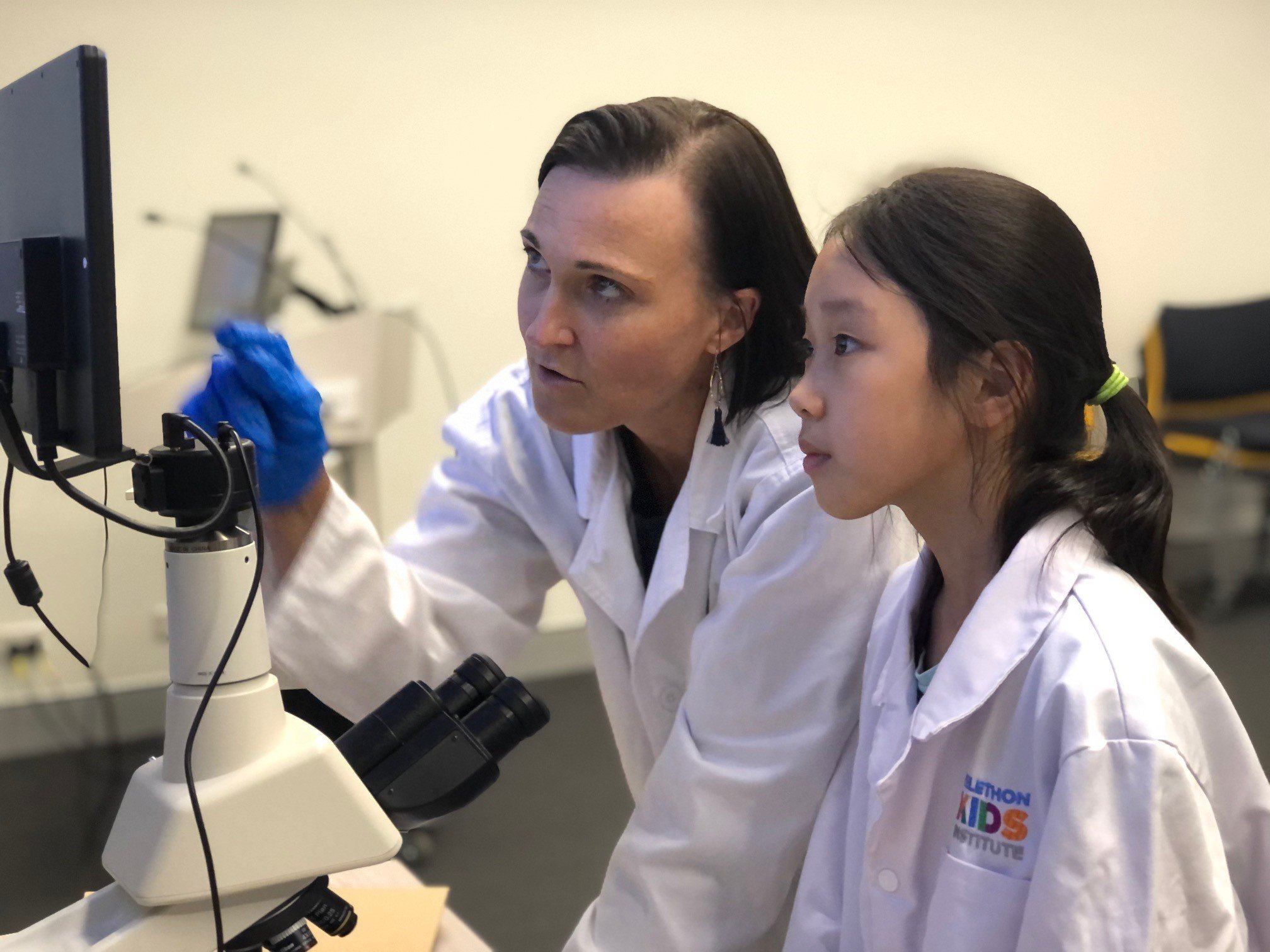
Our popular workshops for kids are back these school holidays and we have a jam-packed program full of fun and engaging science activities!
Amy Penelope Yael Finlay-Jones Strauss Perry BPsych(Hons), MPsych(Clinical), MHealthEcon, PhD (Clin Psych) BA, MPH, PhD BPsych (Hons) MPsych (Clin)
Access to adequate nutrition is a human right. In 2023, 23% of Australian households were severely food insecure, reducing food intake, skipping meals or days of eating. Food insecurity in early childhood is linked to poor health and development. Specifically, breakfast provides children with the necessary nutrients required for sustained attention, memory, and cognitive growth. Australian research has reported that one in three children aged 8–18 years regularly skip breakfast. However, there is little understanding of the prevalence of food insecurity among young children in Australia.
The “Earthrise” photograph, taken on the 1968 Apollo 8 mission, became one of the most significant images of the 20th Century. It triggered a profound shift in environmental awareness and the potential for human unity—inspiring the first Earth Day in 1970. Taking inspiration from these events 50 years later, we initiated Project Earthrise at our 2020 annual conference of inVIVO Planetary Health.
We propose that mechanical abnormalities of the airway wall acquired through disrupted fetal growth impact susceptibility to disease