Skip to content
The Kids Research Institute Australia logo
Donate

Search

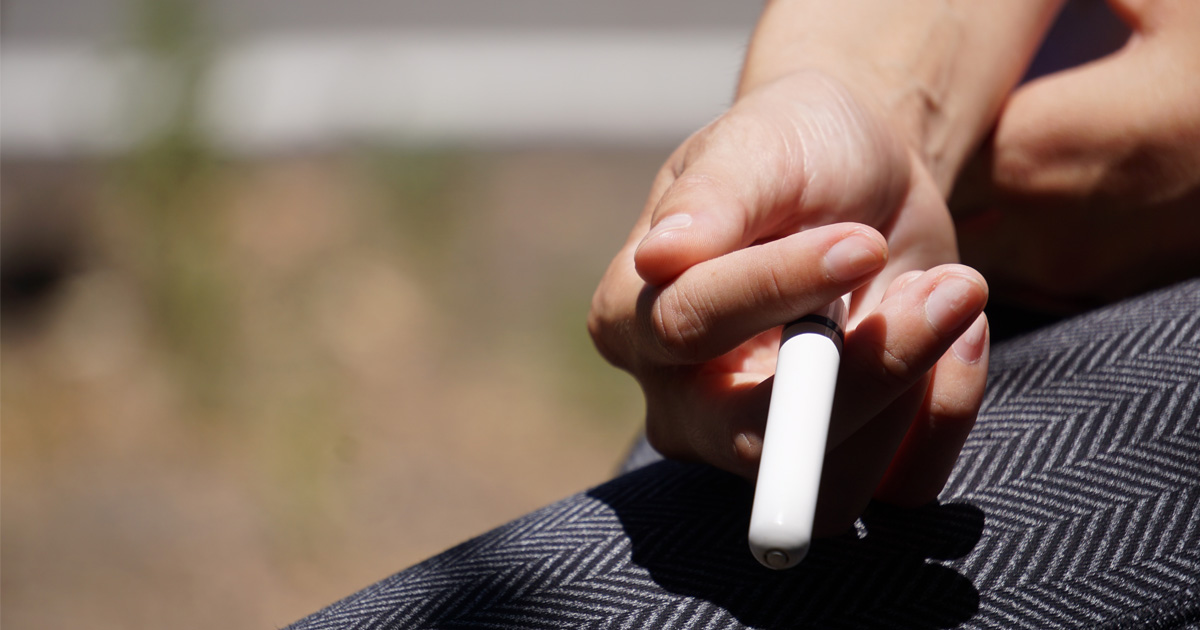
The Kids Research Institute Australia welcomes tough new measures to save kids from vaping

The Kids Research Institute Australia strongly supports the Federal Government’s announcement today to introduce a suite of reforms aimed at banning non-prescription vaping products in Australia.

Toxic, harmful chemicals found in popular Australian e-liquids

Perth researchers have found toxic and harmful chemicals in several dozen e-cigarette liquids readily available in Australia.

Testing your lungs: Spirometry

Healthy lungs help you to breathe better. This means you can sleep better, as well as play sports, run and walk without being short winded.

The next generation of impact in cystic fibrosis

Lung damage in children with CF occurs much earlier than previously thought, and proving this is related to the decline that occurs later will create new paradigms for prevention and treatment.

A primary cell model of the very preterm epithelium reveals barrier defects at 1 year of age

Limited evidence suggests that airway epithelial structure and function is disrupted in very preterm infants; however, the epithelial morphology and physiology has not been well characterised following discharge from neonatal intensive care. This study aimed to characterise the nasal airway epithelium from 1-year-old survivors of very preterm birth.

Who gets asthma, and why?

Citation: Evans DJ, D Sly PD, Foster P, Donovan C. Who gets asthma, and why? Med J Aust. 2025;223(S10):S19-S23. Keywords: Asthma; Lung diseases;

Finding the optimal regimen for Mycobacteroides abscessus treatment (FORMaT) in people with Mycobacteroides abscessus pulmonary disease

Mycobacteroides abscessus (MABS) is within the non-tuberculous mycobacteria family. It inhabits soil and water, exhibits multi-antibiotic resistance and causes opportunistic lung infections, which may progress to symptomatic MABS-pulmonary disease (MABS-PD) associated with substantial morbidity, increased healthcare utilisation, impaired quality of life and increased mortality. 

The EU Child Cohort Network’s core data: establishing a set of findable, accessible, interoperable and re-usable (FAIR) variables

The Horizon2020 LifeCycle Project is a cross-cohort collaboration which brings together data from multiple birth cohorts from across Europe and Australia to facilitate studies on the influence of early-life exposures on later health outcomes. A major product of this collaboration has been the establishment of a FAIR (findable, accessible, interoperable and reusable) data resource known as the EU Child Cohort Network. Here we focus on the EU Child Cohort Network's core variables.

Official ERS technical standard: Global Lung Function Initiative reference values for static lung volumes in individuals of European ancestry

Measurement of lung volumes across the life course is critical to the diagnosis and management of lung disease. The aim of the study was to use the Global Lung Function Initiative methodology to develop all-age multi-ethnic reference equations for lung volume indices determined using body plethysmography and gas dilution techniques.

Lung abnormalities do not influence aerobic capacity in school children born preterm

Children born preterm have impaired lung function and altered lung structure. However, there are conflicting reports on how preterm birth impacts aerobic exercise capacity in childhood. We aimed to investigate how neonatal history and a diagnosis of bronchopulmonary dysplasia (BPD) impact the relationship between function and structure of the lung, and aerobic capacity in school-aged children born very preterm.