
Search
Showing results for "early lung health"
This study highlights a range of unique profiles that can be used for improving the early development of young Aboriginal children
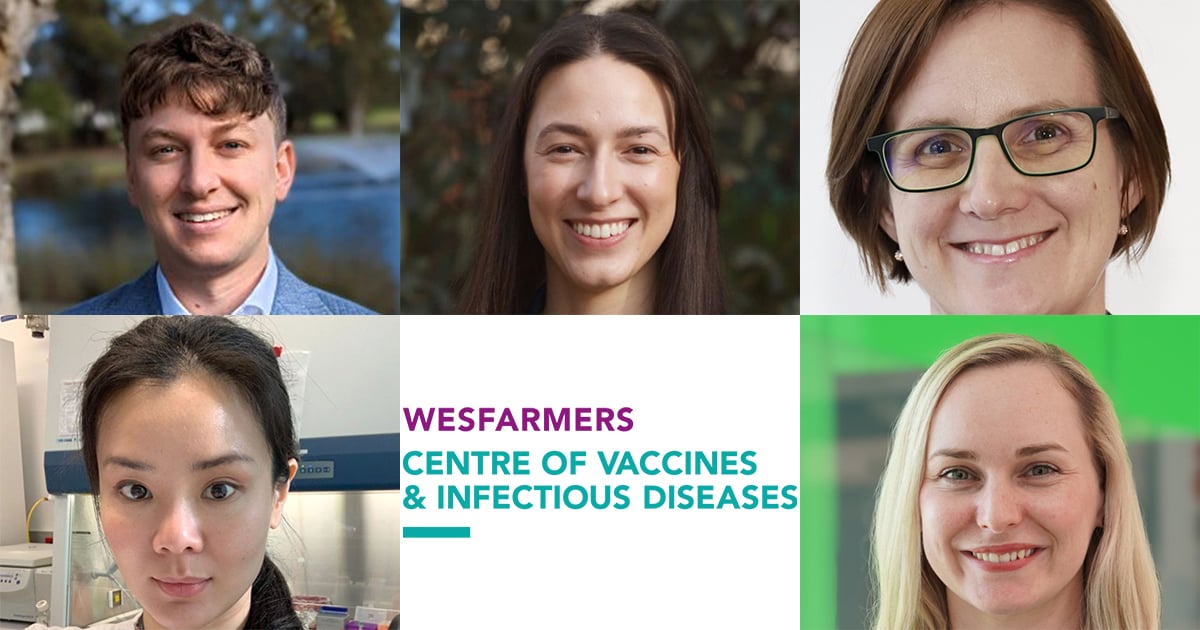
Congratulations to Alec Truswell, Tamara Veselinović, Anastasia Phillips, and Wenna Lee for being awarded Seed Funding through the Wesfarmers Centre of Vaccines & Infectious Diseases, each valued at up to $25,000, and to Sonia McAlister, the recipient of the 2026 Riley Hughes Memorial Award in Pertussis Research.
Chinese immigrants living in Australia experience increased allergic conditions: asthma, eczema, hay fever and wheeze. Recently we reported diminished innate cytokine responses in long-term immigrants, potentially increasing their pathogenic viral load and microbial carriage. We hypothesise that a Western environment changes the nasal microbiome profile, and this altered profile may be associated with the development of allergic conditions. In this cross-sectional study, we aimed to examine the loading of viral and microbial respiratory pathogens in the upper airway.
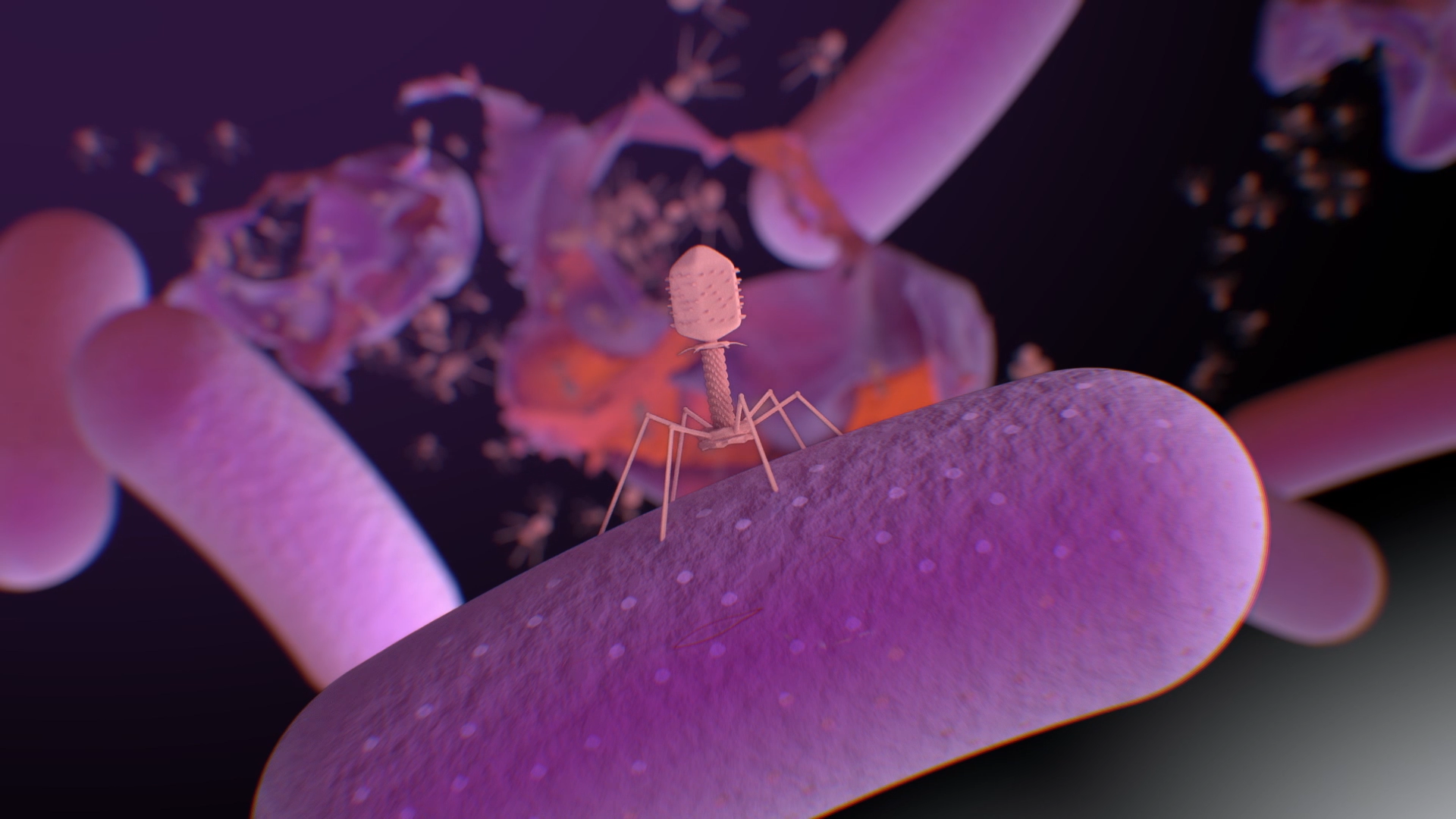
Find out how you can get involved with our work at Phage WA.
The Department for Education commissioned this report to understand how such gender differences in early childhood may influence outcomes later in life.

Program Coordinator

Focusing on the developmental trajectories of respiratory health includes developing strategies to improve and support immune system function and development over the life course.
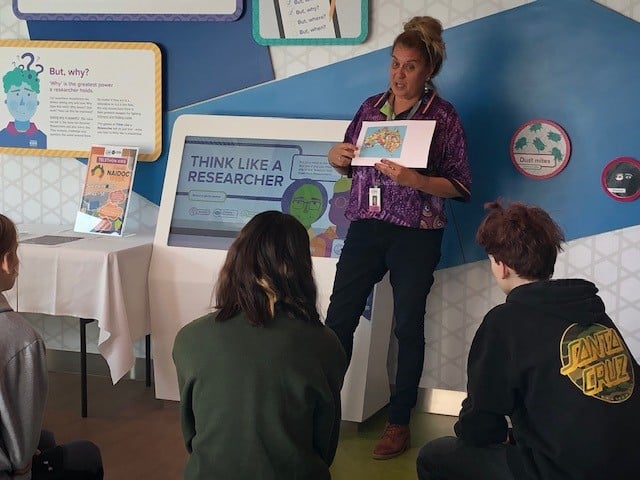
Register your interest to book a special NAIDOC Week x The Kids school excursion.
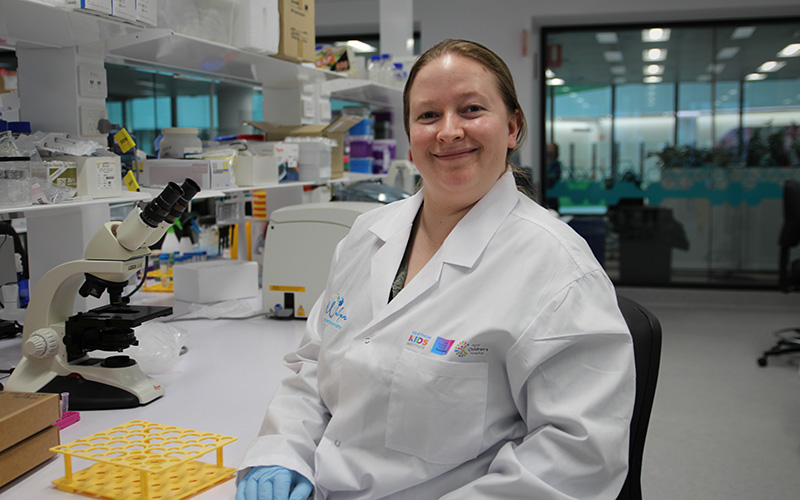
Wal-yan Respiratory Research Centre PhD candidate Katherine Landwehr is researching the impact of breathing in biodiesel exhaust fumes on the lungs.
Normal in utero lung development and growth rely upon the expansion of airspaces and the controlled efflux of lung liquid into the amniotic space. Infants with congenital diaphragmatic hernia (CDH) also have lung hypoplasia due to occupation of the chest cavity by the stomach and bowel and, in the most severe cases, the liver. Balloon tracheal occlusion reduces the severity of lung hypoplasia in fetuses with CDH but increases the risk of premature birth.