
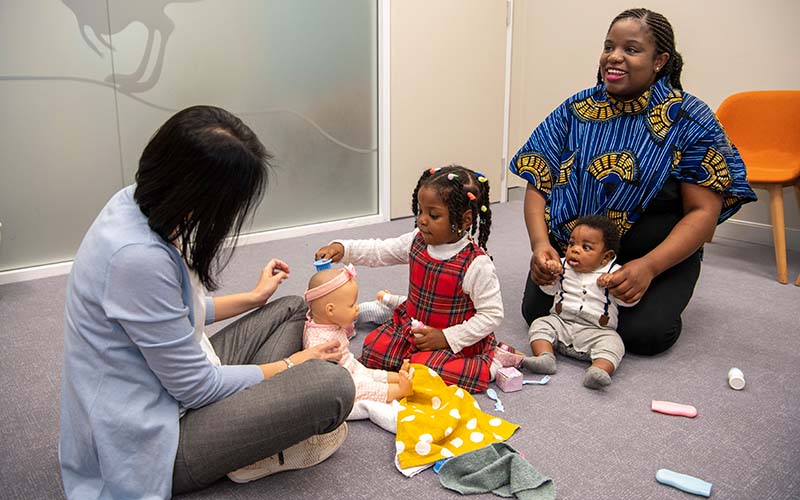
The Kids' autism research takes place at CliniKids, a centre that integrates world-class research with a clinical service for children with developme…
Reported practice of some professionals in Australia may not be consistent with international best practice guidelines for ASD diagnosis
Mothers of children with autism without ID had increased risk of cancer, which may relate to common genetic pathways
Strictly defined cases of social (pragmatic) communication disorder and specific language impairment can be distinguished from autism spectrum disord…
Delayed or impaired language development is a common developmental concern, yet there is little agreement about the criteria used to identify and cla…
The rate of transition to psychotic disorder in ultra high risk (UHR) patients has declined in recent cohorts. The reasons for this are unclear, but…
There is a lack of understanding of why some people who self-harm escalate to suicidal behaviour when others do not. Psychological factors such as at…
Common variants at 2p12 show suggestive evidence for association with childhood aggression
Clinical perspective from the ultra high risk (UHR) paradigm, that aims to identify people at high risk of psychotic disorder
Restricted and repetitive behaviours constitute a core symptom domain of autism spectrum disorder