
Search
Showing results for "aboriginal respiratory"
The Opportunity This position provides the successful appointee the opportunity to work within an experienced clinical trial research team. They will
The Opportunity We are seeking a motivated and enthusiastic Leadership & OD Business Partner to support the Manager to develop and implement
A research leadership & research management role across established research projects in FASD Prevention, Diagnosis, and Therapy/support
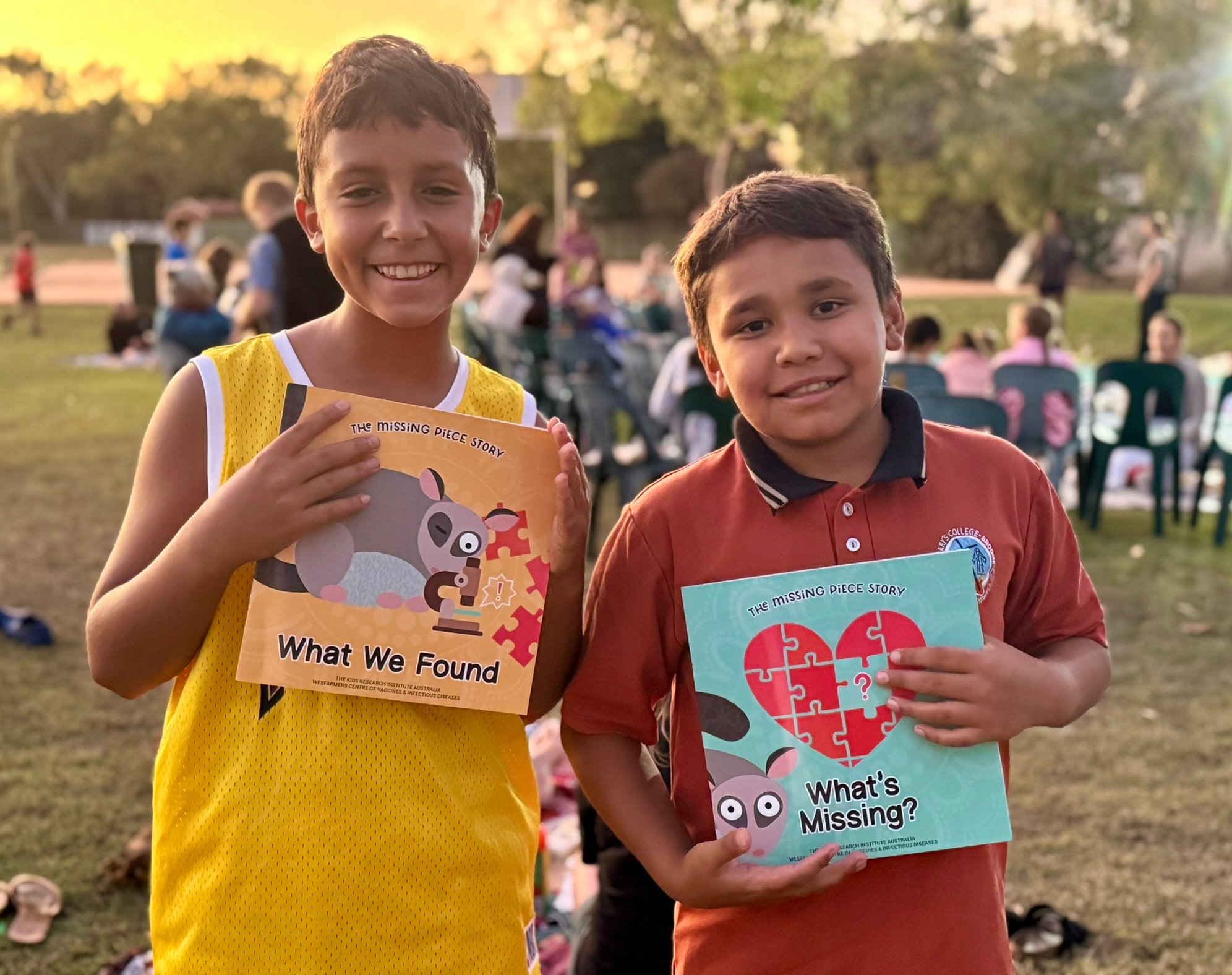
Wesfarmers Centre of Vaccines and Infectious Diseases researchers Dr Janessa Pickering and Dr August Mikucki travelled to Broome last week for the official launch of the long-awaited Missing Piece story books.
Group A streptococcus (GAS) infections, such as pharyngitis and impetigo, can lead to rheumatic fever and rheumatic heart disease (RHD). Australian Aboriginal and Torres Strait Islander populations experience high rates of RHD and GAS skin infection, yet rates of GAS pharyngitis are unclear.
This article continues evaluation of the construct validity of the Australian Early Development Census through comparison with linked data from a sample of 2216 4-5 year old children collected as part of the Longitudinal Study of Australian Children.
Chronic suppurative otitis media (CSOM) is a leading global cause of potentially preventable hearing loss in children and adults, associated with socioeconomic deprivation. There is an absence of consensus on the definition of CSOM, which complicates efforts for prevention, treatment, and monitoring.

The Kids Research Institute Australia congratulates Professor Helen Milroy on being named Western Australia’s 2021 Australian of the Year.
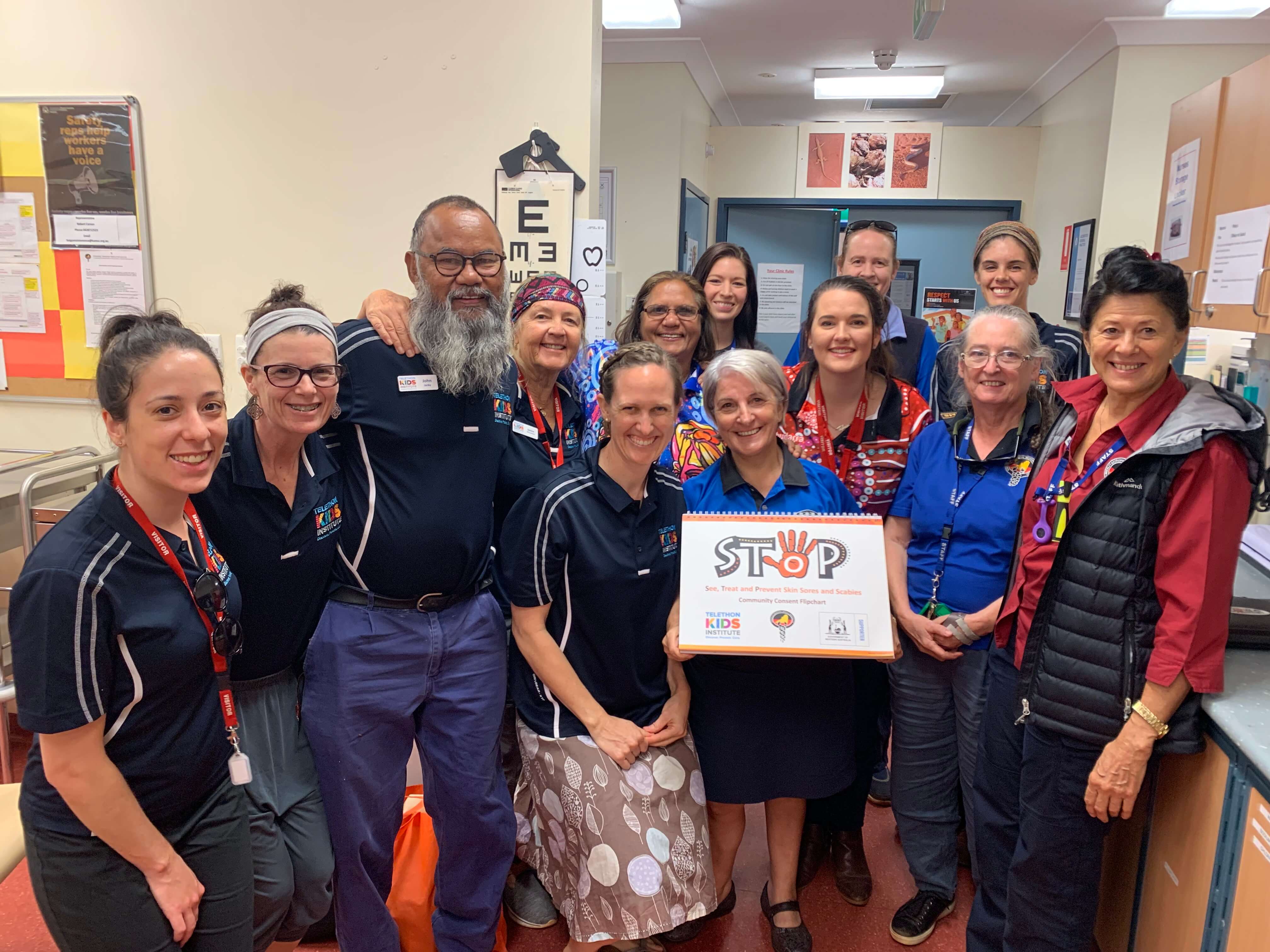
Six weeks, nine community visits and 380 kids – it’s a wrap for round one of the StoP Trial!
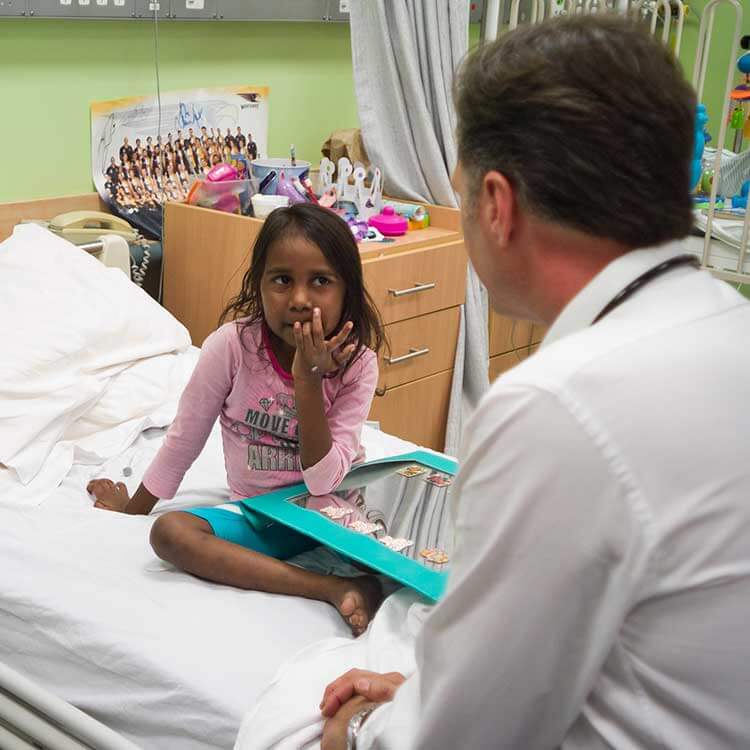
Researchers at The Kids Research Institute Australia say Group A Streptococcus should become a nationally notifiable disease in Australia.