Skip to content

Search

Showing results for "aboriginal respiratory"

Community bands together to improve lung health of Aboriginal children in East Kimberley

September marks the three-month milestone of an intensive health promotion campaign in the East Kimberley region, which aims to raise awareness of the dangers of a chronic wet cough in Aboriginal children.

The Koolungar (Children) Moorditj (Strong) Healthy Skin Project Part I: Conducting First Nations Research in Pediatric Dermatology

Integrating First Nations knowledge systems and Western research methodologies recognizes the strength, experience, and insight of First Nations peoples in addressing health issues in their communities. In research, this includes projects being led by First Nations Elders and peoples, including First Nations researchers in the team, and collecting data in ways that reflect First Nations ways of knowing, being, and doing.

Consumer perspectives on simplified, layered consent for a low risk, but complex pragmatic trial

For decades, the research community has called for participant information sheets/consent forms (PICFs) to be improved. Recommendations include simplifying content, reducing length, presenting information in layers and using multimedia. However, there are relatively few studies that have evaluated health consumers' (patients/carers) perspectives on the type and organisation of information, and the level of detail to be included in a PICF to optimise an informed decision to enter a trial.

$3.4 million funding boost supercharges fight against RSV

National research led by the Wesfarmers Centre of Vaccines and Infectious Diseases, based at The Kids Research Institute Australia, has secured more than $3.4 million to assess the epidemiology of respiratory syncytial virus (RSV) throughout the country and optimise Australia’s immunisation strategy.

New tool guides families on RSV immunisation

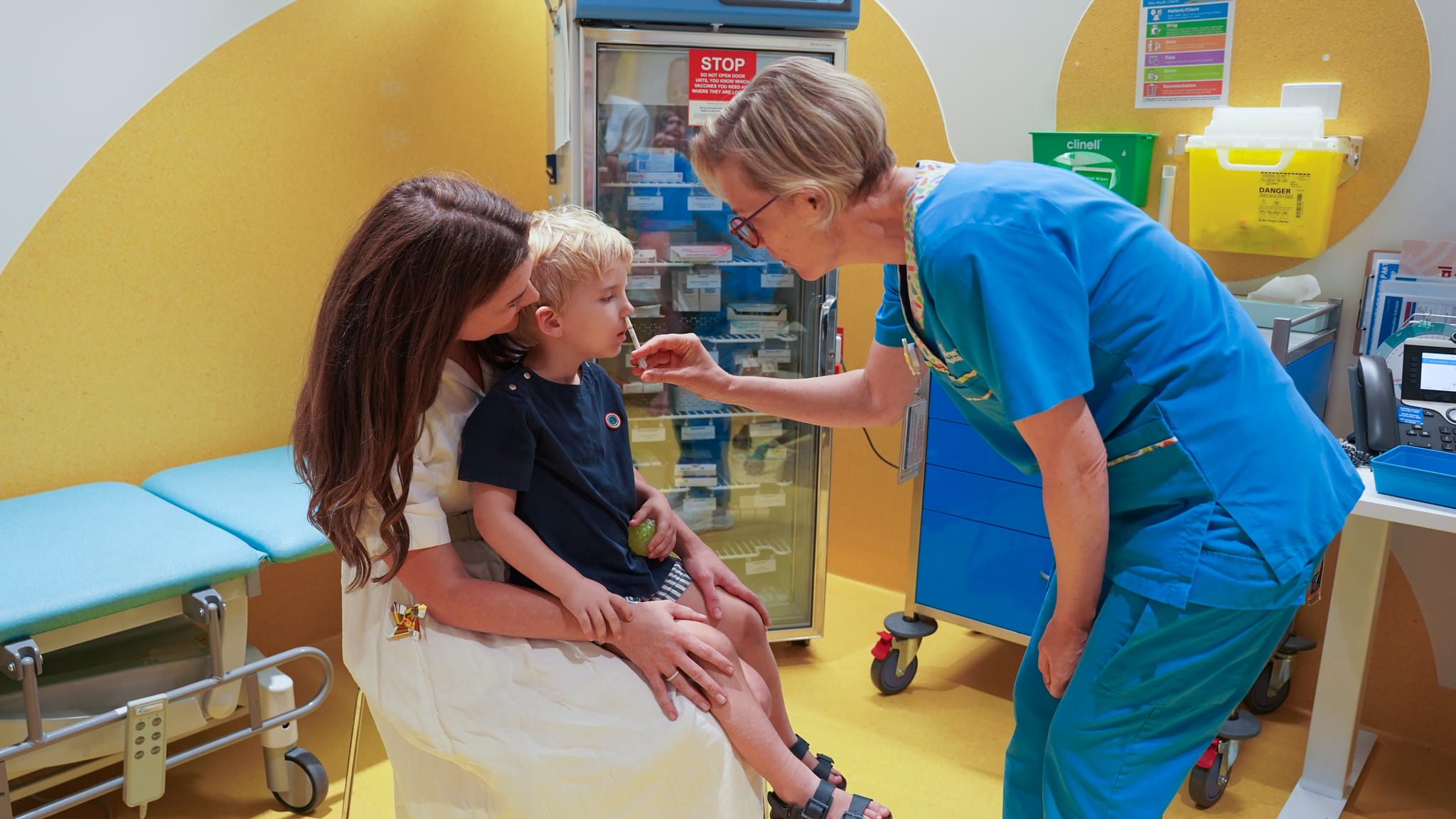
Researchers from the Wesfarmers Centre of Vaccines and Infectious Diseases, based at The Kids Research Institute Australia, have launched an online guidance tool designed to help families and health-care providers in WA learn the best way to protect babies and young children against life-threatening respiratory syncytial virus (RSV).

Congratulations to Professor Helen Milroy – WA’s 2021 Australian of the Year

The Kids Research Institute Australia congratulates Professor Helen Milroy on being named Western Australia’s 2021 Australian of the Year.

Ear Portal: An urban-based ear, nose, and throat, and audiology referral telehealth portal to improve access to specialist ear-health services for children

Shortage of ear, nose, and throat specialists in public hospitals can result in delays in the detection and management of otitis media. This study introduced a new hospital-based telehealth service, named the Ear Portal, and investigated its role in improving access to specialist care.

Investigating the Validity of the Australian Early Development Census

This article continues evaluation of the construct validity of the Australian Early Development Census through comparison with linked data from a sample of 2216 4-5 year old children collected as part of the Longitudinal Study of Australian Children.

The overlapping burden of the three leading causes of disability and death in sub-Saharan African children

Despite substantial declines since 2000, lower respiratory infections (LRIs), diarrhoeal diseases, and malaria remain among the leading causes of nonfatal and fatal disease burden for children under 5 years of age (under 5), primarily in sub-Saharan Africa.

Biodiesel Exhaust Toxicity with and without Diethylene Glycol Dimethyl Ether Fuel Additive in Primary Airway Epithelial Cells Grown at the Air-Liquid Interface

Biodiesel usage is increasing steadily worldwide as the push for renewable fuel sources increases. The increased oxygen content in biodiesel fuel is believed to cause decreased particulate matter (PM) and increased nitrous oxides within its exhaust.

Early detection of hearing loss for infants in Western Australia: Comparison to international benchmarks

To assess the degree to which timely audiological assessment of congenital hearing loss is achieved at our institution - Perth Children's Hospital, Western Australia, and to review cases which breached this timeframe in order to address barriers to timely assessment. The benchmark used to determine timely assessment is that set out by The Joint Committee on Infant Hearing (JCIH) in which diagnostic audiological testing occurs by three months of age for those who do not pass newborn hearing screening.

Attenuation of maternal inflammatory responses during pregnancy to promote normal immune and behavioral outcomes in the offspring

This study will identify how the immune system contributes to neurodevelopmental outcomes and will investigate the use of an agent from traditional medicines.