
Search
Showing results for "mental health aboriginal"
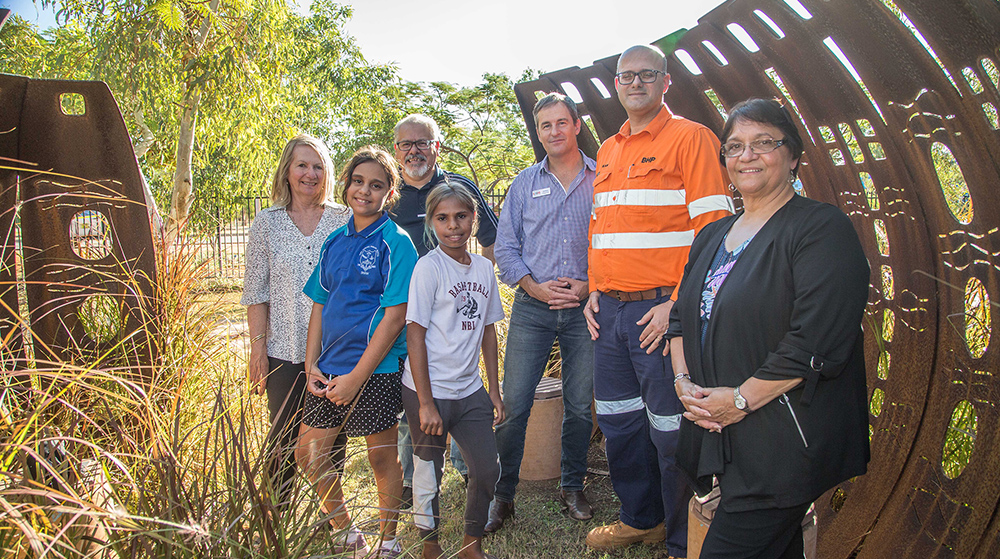
A five-year, $5 million research program funded by BHP and aimed at reducing the prevalence and impact of FASD in the Pilbara officially wrapped in South Hedland last night.
Internationally recognised child health researcher Professor Donna Cross will join The Kids for Child Health Research in 2014.
Child health researchers are urging community support to help women avoid alcohol in pregnancy and if planning a pregnancy.
Prevalence of impetigo (skin sores) remains high in remote Australian Aboriginal communities, Fiji, and other areas of socio-economic disadvantage. Skin sore infections, driven primarily in these settings by Group A Streptococcus (GAS) contribute substantially to the disease burden in these areas. Despite this, estimates for the force of infection, infectious period and basic reproductive ratio-all necessary for the construction of dynamic transmission models-have not been obtained.
Trailblazing Aboriginal doctor and health researcher Professor Alex Brown has been made a Fellow of the Australian Academy of Technological Sciences and Engineering (ATSE) in recognition of his leadership in ensuring Indigenous peoples are at the forefront of genomics efforts nationally and internationally.

Dr Asha Bowen, Head of Skin Health at the Wesfarmers Centre of Vaccines and Infectious Diseases, has been awarded a 2018 Fellowship as part of the prestigious L’Oréal-UNESCO Women in Science program.
Emotional labour is the process by which people regulate emotions congruently with occupational requirements. Research consistently links emotional labour to greater levels of burnout. However, we argue this literature is potentially confounded by measurement error.
In 1996, the ISPCAN Working Group on Child Maltreatment Data (ISPCAN-WGCMD) was established to provide an international forum in which individuals, who deal with child maltreatment data in their respective professional roles, can share concerns and solutions.
Over the past decade there has been a marked growth in the use of linked population administrative data for child protection research. This is the first systematic review of studies to report on research design and statistical methods used where population-based administrative data is integrated with longitudinal data in child protection settings.
World perspectives in child abuse population level cross-jurisdictional data: Broadening the monitoring and surveillance of child abuse and neglect.