
Search
Showing results for "Childhood interstitial lung disease "
Malaria remains one of the leading causes of death, particularly in Africa and among children.
The needs of Aboriginal stroke patients with acquired communication disorder should inform appropriate service design for speech pathology and rehabilitation
Pneumococcal colonization of the nasopharynx is especially common in young children and is a pre-requisite for pneumococcal disease...
In the austral summer of 2021-2022, Australia experienced an unprecedented Japanese encephalitis virus (JEV) outbreak, with detections over 3000 km south of previous occurrences. Given the limited knowledge of JEV transmission ecology in Australia, we developed geospatial models of transmission risk to support the public health response. We created time-varying habitat suitability models for suspected mosquito vectors and ardeid hosts using month-scaled occurrence and covariate data from 2000-2023.
Estimating the temporal trends in infectious disease activity is crucial for monitoring disease spread and the impact of interventions. Surveillance indicators routinely collected to monitor these trends are often a composite of multiple pathogens. For example, "influenza-like illness"-routinely monitored as a proxy for influenza infections-is a symptom definition that could be caused by a wide range of pathogens, including multiple subtypes of influenza, SARS-CoV-2, and RSV.
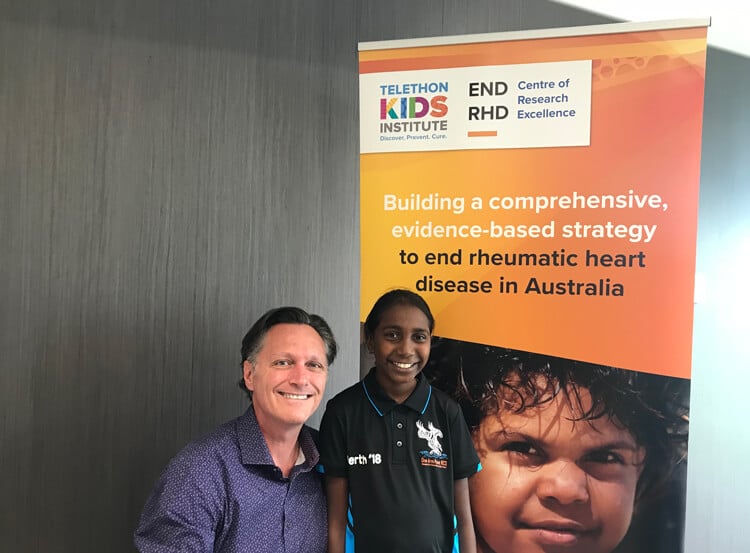
Laqueisha was just five years old when she was diagnosed with rheumatic heart disease and sent on a 5,000km return trip to Perth for major heart surgery.
Individual-based models of infectious disease dynamics commonly use network structures to represent human interactions. Network structures can vary in complexity, from single-layered with homogeneous mixing to multi-layered with clustering and layer-specific contact weights. Here we assessed policy-relevant consequences of network choice by simulating different network structures within an established individual-based model of SARS-CoV-2 dynamics.
In malaria epidemiology, interpolation frameworks based on available observations are critical for policy decisions and interpreting disease burden. Updating our understanding of the empirical evidence across different populations, settings, and timeframes is crucial to improving inference for supporting public health.
Our local data supports continuing intramuscular injection of BPG in patients with rheumatic heart disease receiving anticoagulant medication
Stroke risk and cardiovascular mortality are markedly higher for Aboriginal than non-Aboriginal patients with atrial fibrillation, particularly for patients under 60