
Search
Showing results for "early lung health"
Staphylococcus aureus bacteraemia (SAB) is the most common cause of sepsis, contributing to paediatric intensive care unit admission in Australia and New Zealand. While deep venous thrombosis (DVT) has been reported in children with invasive S. aureus infections, the actual frequency and possible effects of thrombosis on disease severity and outcome in paediatric SAB remain unknown. Moreover, guidance regarding imaging for paediatric SAB management are poorly defined.
Helen Jenny Leonard Downs MBChB MPH BApplSci (physio) MSc PhD Principal Research Fellow Head, Child Disability +61 419 956 946 08 6319 1763
Christopher Hannah Peter Peter Blyth Moore Jacoby Richmond MBBS (Hons) DCH FRACP FRCPA PhD OAM BSc (Hons) GradDipClinEpi PhD BA (Hons) MSc MBBS MRCP(
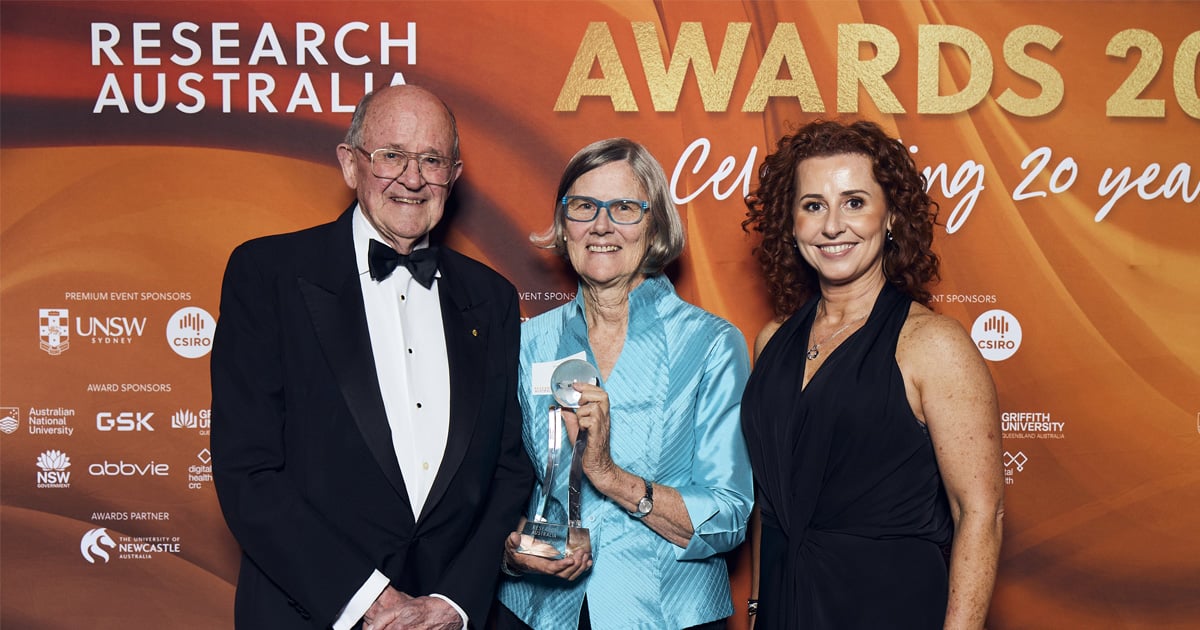
One of The Kids Research Institute Australia’s most influential researchers, who has played a seminal role in birth defect research and advocacy over a four-decade career, has won the Peter Wills Medal – the Australian research community’s flagship award.

Many people would be daunted when tasked with coordinating, from scratch, a new The Kids Research Institute Australia satellite site to service WA’s north. But not John Jacky
To investigate temporal trends in admission rates for acute lower respiratory infections (ALRI) in a total population birth cohort of non-Aboriginal and...
We generated updated estimates of child mortality in various age groups for 188 countries from 1970 to 2013.
There is a lack of data on the out-of-hospital burden of acute lower respiratory infections (ALRI) in developed countries.
Asha Jonathan Bowen Carapetis AM BA MBBS DCH FRACP PhD GAICD FAHMS OAM AM MBBS FRACP FAFPHM PhD FAHMS Head, Healthy Skin and ARF Prevention Co-Head,
There are an estimated 5000 episodes per year of bloodstream infections due to Staphylococcus aureus (golden staph) in Australia and an associated mortality of 20%. Despite this, there is little clinical trials evidence to guide best management.