
Search
Showing results for "lung disease preterm"
Aboriginal children and families contend with higher rates of preventable infectious diseases that can be attributed to their immediate living environment. The environments in which children spend most of their time are their homes and schools. We aimed to understand the opportunities in the school setting to support student skin health and wellbeing through environmental health activities, how these activities were completed, and the barriers to their implementation.
Food allergy affects families' quality of life, can be lifelong and life-threatening, urging the identification of early modifiable risk factors. Formula feeding in the first days of life may increase the risk of cow's milk allergy, a risk often attributed to cow's milk allergens exposure. Early formula feeding also reduces the colostrum intake, the first 3 days' milk, which is rich in bioactive compounds critical for immune and gut health. This study investigates whether partial colostrum feeding increases the risk of food allergy beyond cow's milk.
For millennia, Aboriginal people's ways of knowing, doing and being were shared through art, song, and dance. Colonisation silenced these ways, affecting loss of self-determination for Aboriginal people. Over the past decade in Australia, hip-hop projects have become culturally appropriate approaches for health promotion.
We have demonstrated the potential use of Bayesian Networks in improving antibiotic selection for children with osteomyelitis
ARC is a global network of collaborators committed to reducing the burden of RHD in our lifetime.
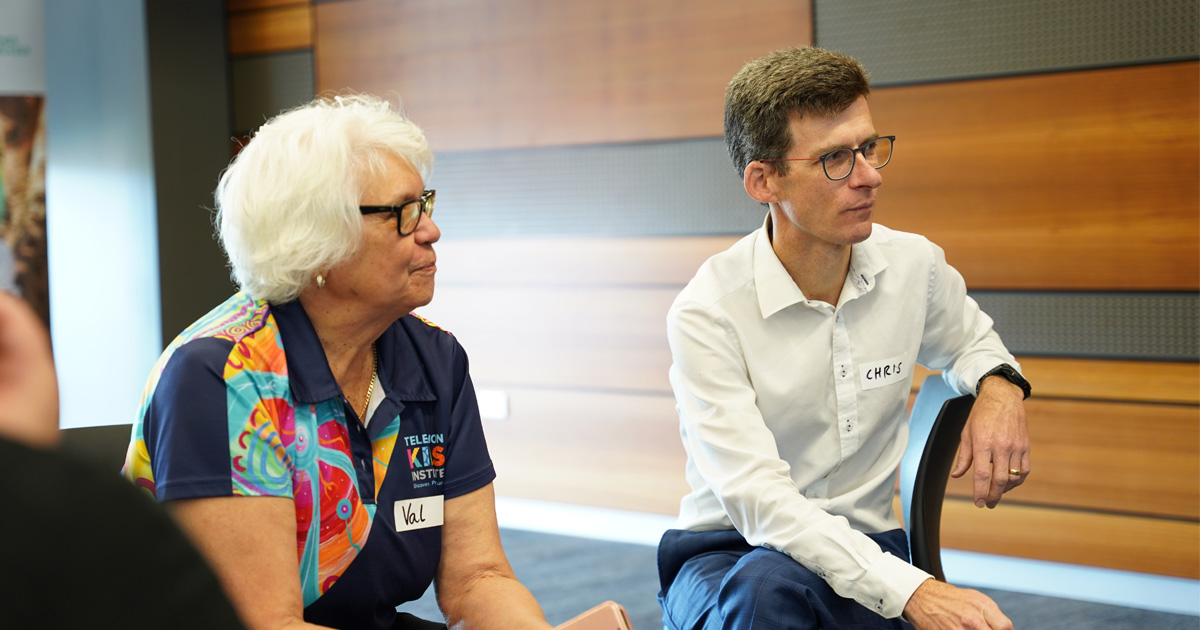
Researchers from the Wesfarmers Centre of Vaccines and Infectious Diseases at The Kids Research Institute Australia have shared their expertise with the community in Cockburn, covering topics ranging from respiratory disease in babies to recurring ear infections in kids.
The Djaalinj Waakinj (Listening, Talking) Ear Portal project commenced in 2020 to evaluate an equitable ear and hearing care pathway for Aboriginal children residing in the metropolitan area of Perth.
The COVID-19 pandemic has led to far-reaching disruptions to health systems, including preventative and curative services for malaria. The aim of this study was to estimate the magnitude of disruptions in malaria case management in sub-Saharan Africa and their impact on malaria burden during the COVID-19 pandemic. We used survey data collected by the World Health Organization, in which individual country stakeholders reported on the extent of disruptions to malaria diagnosis and treatment.
Head lice is an ectoparasitic skin infection commonly seen in primary school-aged children. In remote Australia, where rates of other skin infections and downstream sequelae are endemic, the rate of head lice infestation is unknown.
Language is significant for communicating knowledge across cultures and generations and has the power to attribute meanings and alter our worldviews.