
Search
Showing results for "mental health aboriginal"
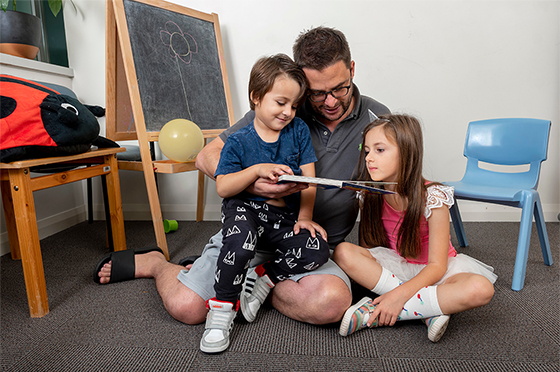
In this blog, Speech Pathologist Genevieve Wilmot discusses the many benefits of book sharing and how it can promote connection and social and communication development.

Everything you need to know to book tickets to our upcoming school holiday workshops in April held at Scitech!

Most children are capable of bullying behaviour at some time, and it’s our job as parents to discourage this behaviour as soon as it appears.

As our Founding Director Fiona Stanley puts it, The Kids Research Institute Australia was formed on a "wing and a prayer".
A world-first study from The Kids for Child Health Research has identified risk factors for receptive language development in Australian children.
Helen Jenny Peter Leonard Downs Richmond MBChB MPH BApplSci (physio) MSc PhD MBBS MRCP(UK) FRACP Principal Research Fellow Head, Child Disability
We describe change in gross motor function over 3 to 4 years for 70 subjects participating in the Australian Rett Syndrome Database
Modifications to diagnostic criteria and introduction of genetic testing have likely affected the pattern and timing of Rett syndrome diagnosis...
Loss of hand function is a core feature of Rett syndrome. This article describes longitudinal hand function at 3 time points for 72 subjects participating...
Scoliosis is a common orthopaedic complication of Rett syndrome, and surgery is commonly used to reduce asymmetry in cases with severe scoliosis.