
Search
Showing results for "preterm birth lungs"
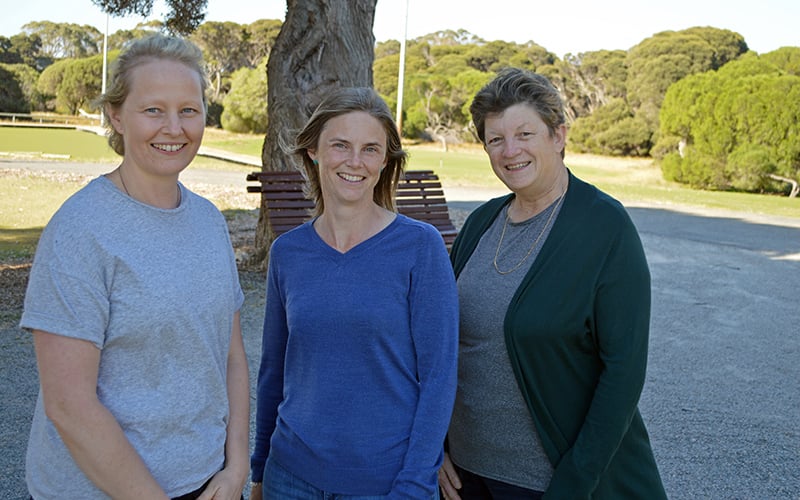
Preterm researchers Dr Shannon Simpson (left) and Professor Jane Pillow (right) with Tony Sparks WA chairperson Amber Bates.
Jane Pillow BMedSci (Dist) MBBS, PhD (Dist) FRACP Head, Developmental Chronobiology jane.pillow@thekids.org.au Head, Developmental Chronobiology
Exhaled breath condensate (EBC) collection is a non-invasive, safe method for measurement of biomarkers in patients with lung disease. Other methods of obtaining samples from the lungs, such as bronchoalveolar lavage, are invasive and require anaesthesia/sedation in neonates and infants. EBC is particularly appealing for assessing biomarkers in preterm-born infants, a population at risk of ongoing lung disease.
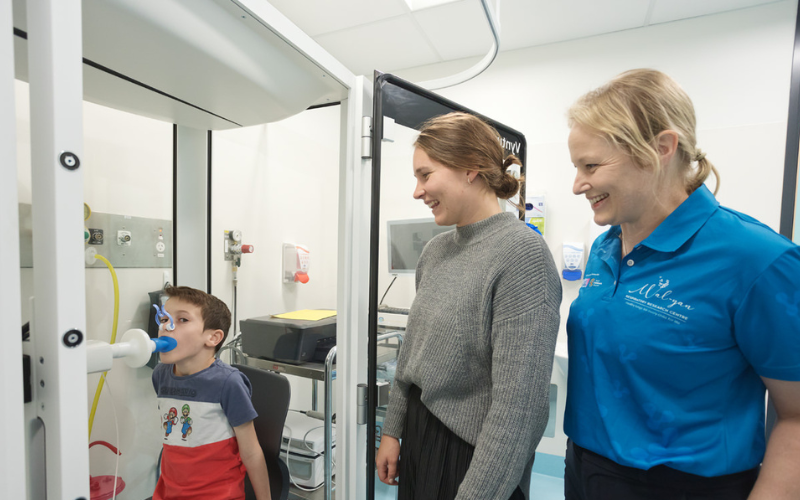
A new study has found a common asthma drug is effective for some very premature babies who go on to suffer from lung complications.
Anthony Christopher David Ingrid Shannon Thomas Kicic Blyth Martino Laing Simpson Iosifidis BSc (Hons) PhD MBBS (Hons) DCH FRACP FRCPA PhD BSc PhD

Wal-yan Respiratory Research Centre researcher Ms Denby Evans has been awarded one of four inaugural fellowships supported by the State's Future Health Research and Innovation (FHRI) Fund and Brightspark Foundation, enabling her to further her research into ways to improve the lung health of people

Analysis of worldwide research shows that despite advances in neonatal care, preterm babies have lower lung function throughout their life.
Right shift of the peripheral oxyhaemoglobin saturation (SpO2) versus inspired oxygen pressure (PIO2) curve is a sensitive marker of pulmonary gas exchange. The aim of this study was to assess the impact of prematurity and bronchopulmonary dysplasia (BPD) on gas exchange and right-to-left shunt in the neonatal period, and its evolution over the first year of life.
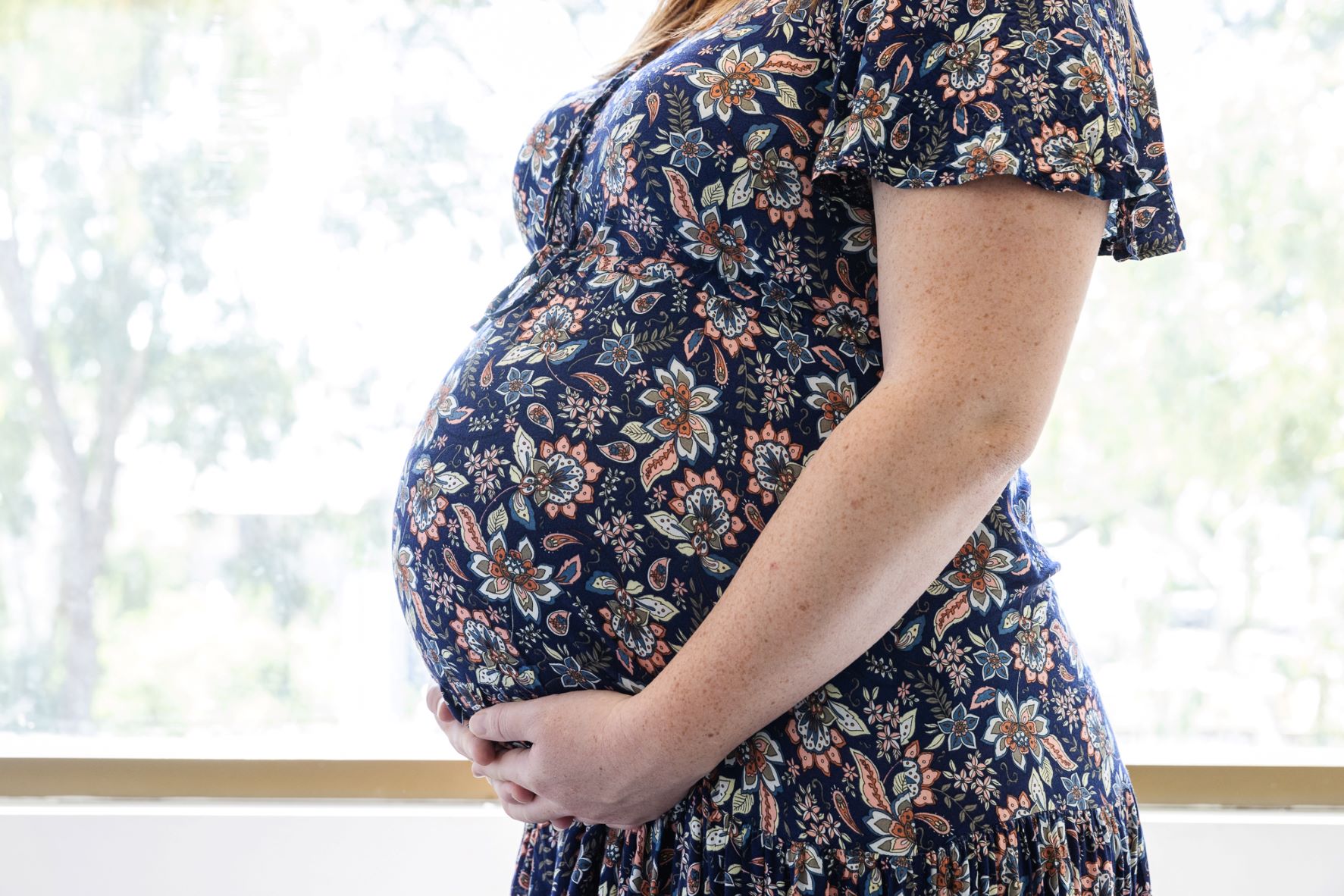
This research focuses on understanding how maternal health, lifestyle, and fertility influence pregnancy outcomes and the early development of children.
Inflammation and oxidative stress play a key role in the development of bronchopulmonary dysplasia (BPD), possibly contributing to persistent respiratory morbidity after preterm birth. We aimed to assess if inflammatory markers were elevated in exhaled breath condensate (EBC) of infants born very prematurely (< 32 weeks gestation) at 12-16 corrected months of age, and if increased levels were associated with BPD diagnosis and respiratory morbidity.