Search
Research
Reliability of the Commonly Used and Newly-Developed Autism MeasuresThe aim of the present study was to compare scale and conditional reliability derived from item response theory analyses among the most commonly used, as well as several newly developed, observation, interview, and parent-report autism instruments.
Research
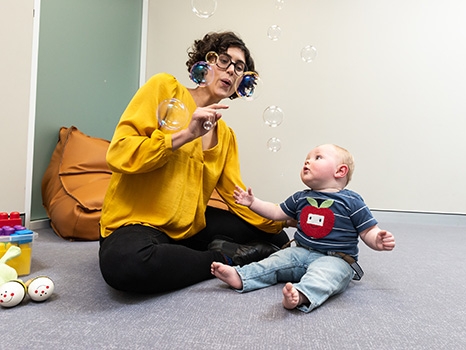
Parent-child interaction and developmental outcomes in children with typical and elevated likelihood of autismEarly parent-child interactions have a critical impact on the developmental outcomes of the child. It has been reported that infants with a family history of autism and their parents may engage in different patterns of behaviours during interaction compared to those without a family history of autism. This study investigated the association of parent-child interactions with child developmental outcomes of those with typical and elevated likelihood of autism.
Research
Language and reading impairments are associated with increased prevalence of non-right-handednessHandedness has been studied for association with language-related disorders because of its link with language hemispheric dominance. No clear pattern has emerged, possibly because of small samples, publication bias, and heterogeneous criteria across studies.
Research
Brain-behavior links in autism spectrum disorder across the lifespanAndrew Videos Whitehouse Watch and listen to Andrew PhD Deputy Director (Research); Angela Wright Bennett Professor of Autism Research at The Kids
Research
Devising a Missing Data Rule for a Quality of Life Questionnaire - A Simulation StudyThe aim of this study was to devise an evidence-based missing data rule for the Quality of Life Inventory-Disability (QI-Disability) questionnaire specifying how many missing items are permissible for domain and total scores to be calculated using simple imputation.
Research
“It Was Such a Different Experience”: a Qualitative Study of Parental Perinatal Experiences When Having a Subsequent Child After Having a Child Diagnosed with AutismChildren who have an older sibling diagnosed with autism have an increased likelihood of being diagnosed with autism or developing broader developmental difficulties. This study explored perinatal experiences of parents of a child diagnosed with autism, spanning pre-conception until the subsequent child’s early developmental period.
Research
Co-design of a neurodevelopment assessment scale: A study protocolNeurodevelopmental disorders are a heterogeneous group of conditions with overlapping symptomatology and fluctuating developmental trajectories that transcend current diagnostic categorisation. There is a need for validated screening instruments which dimensionally assess symptomatology from a holistic, transdiagnostic perspective.
Research
Genetic association study of childhood aggression across raters, instruments, and ageChildhood aggressive behavior (AGG) has a substantial heritability of around 50%. Here we present a genome-wide association meta-analysis (GWAMA) of childhood AGG, in which all phenotype measures across childhood ages from multiple assessors were included. We analyzed phenotype assessments for a total of 328 935 observations from 87 485 children aged between 1.5 and 18 years, while accounting for sample overlap.
Research
Genome-Wide Analyses of Vocabulary Size in Infancy and Toddlerhood: Associations With Attention-Deficit/Hyperactivity Disorder, Literacy, and Cognition-Related TraitsThe number of words children produce (expressive vocabulary) and understand (receptive vocabulary) changes rapidly during early development, partially due to genetic factors. Here, we performed a meta-genome-wide association study of vocabulary acquisition and investigated polygenic overlap with literacy, cognition, developmental phenotypes, and neurodevelopmental conditions, including attention-deficit/hyperactivity disorder.
Research
Reliability, Validity and Acceptability of the PEDI-CAT with ASD Scales for Australian Children and Youth on the Autism SpectrumThe PEDI-CAT (ASD) is used to assess functioning of children and youth on the autism spectrum; however, current psychometric evidence is limited. This study aimed to explore the reliability, validity and acceptability of the PEDI-CAT (ASD) using a large Australian sample.