
Search
Showing results for "8"
Many survivors of preterm birth (<37 weeks gestation) have lifelong respiratory deficits, the drivers of which remain unknown. Influencers of pathophysiological outcomes are often detectable at the gene level and pinpointing these differences can help guide targeted research and interventions. This study provides the first transcriptomic analysis of primary nasal airway epithelial cells in survivors of preterm birth at approximately 1 year of age.
The dual-factor model of mental health proposes that high wellbeing and low distress are necessary to define mental health. This study used latent profile analysis to identify mental health profiles in a sample of 3,587 Australian grade 6 students and explored the association between mental health profiles and school outcomes measured in grades 7 and 9.
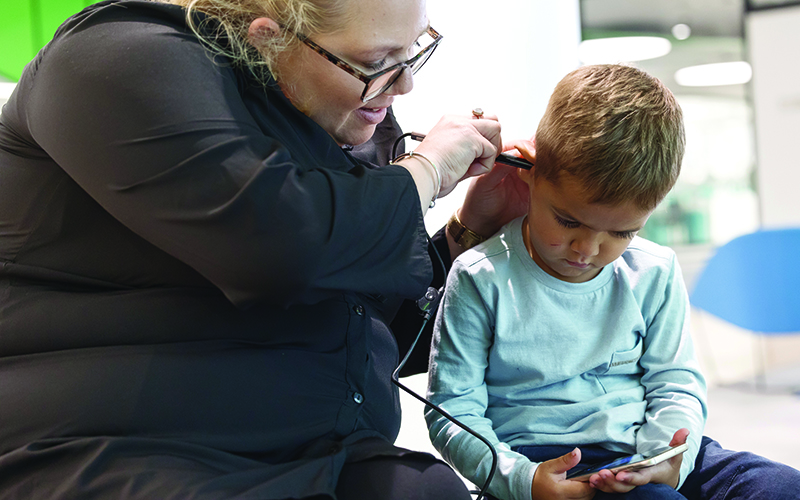
An innovative The Kids program is helping to slash waiting times so children can have their ear problems checked within days.
Maternal diet during pregnancy has long been recognised as an important determinant of neonatal outcomes and child development. Infant body composition is a potentially modifiable risk factor for predicting future health and metabolic disease.
Growing up in a language-rich home environment is important for children's language development in the early years. The concept of "technoference" (technology-based interference) suggests that screen time may be interfering with opportunities for talk and interactions between parent and child; however, limited longitudinal evidence exists exploring this association.
In Australia, Aboriginal children experience disproportionate rates of type 2 diabetes (T2D) compared with non-Aboriginal children. The aim of this qualitative study was to explore the experiences of Aboriginal adolescents with T2D and their family members to better understand the influences of T2D on self-management, with findings used to inform an enhanced service model of care.
Psychological distress in the early postpartum period can have long-lasting deleterious effects on a mother's well-being and negatively affect her infant's development. Intervention approaches based in contemplative practices such as mindfulness and loving-kindness and compassion are intended to alleviate distress and cultivate well-being and can be delivered effectively as digital mental health interventions.
The aim of this study was to determine the unique and shared contributions of various positive psychology constructs (gratitude, optimism, hope, self-compassion, self-efficacy, and emotion regulation) to wellbeing and distress outcomes in young people living with a diverse range of chronic health conditions.
Despite the substantial burden of lung disease throughout childhood in children who were born very preterm, there are no evidence-based interventions to improve lung health beyond the neonatal period. We tested the hypothesis that inhaled corticosteroid improves lung function in this population.
Irritability is a transdiagnostic indicator of child and adolescent internalizing and externalizing problems that is measurable from early life. The objective of this systematic review was to determine the strength of the association between irritability measured from 0 to 5 years and later internalizing and externalizing problems, to identify mediators and moderators of these relationships, and to explore whether the strength of the association varied according to irritability operationalization.