
Search
Showing results for "early lung health"
Parental support is a critical protective factor for trans and gender diverse children, yet many parents lack access to trustworthy, evidence-based information. The Transforming Families project aimed to address this gap by co-designing a digital resource to enhance parental understanding, support, and acceptance.
This project forms a program of modelling to inform the Gate's Foundation’s malaria product development portfolio, otherwise known as the Integrated Portfolio Management (IPM) project.
Otitis media (OM) is a significant health concern, particularly among Aboriginal and/or Torres Strait Islander children who experience one of the highest rates of OM globally. This study aimed to evaluate the use and differences of wideband absorbance at ambient pressure (WBA) among urban Aboriginal and/or Torres Strait Islander and non-Aboriginal children with suspected OM based on standard tympanometry.

New research by The Kids Research Institute Australia has found children who attend playgroups achieve better early primary school outcomes.
NDD's such as ASD, ADHD and ID, commonly emerge during early development and impacts function across cognitive, social-emotional, communication and sensorimotor
Aboriginal and Torres Strait Islander (hereafter respectfully named Indigenous) Australians are diagnosed with some cancers substantially more frequently than non-Indigenous Australians implying a different risk factor landscape. Additionally, poorer outcomes for certain cancers are exacerbated by lower cancer screening rates and later diagnoses compared to non-Indigenous Australians.
Contact tracing is an important public health measure used to reduce transmission of infectious diseases. Contact tracers typically conduct telephone interviews with cases to identify contacts and direct them to quarantine, with the aim of preventing onward transmission. However, in situations where caseloads exceed the capacity of the public health system, timely interviews may not be feasible for all cases. Here we present a modelling framework for assessing the impact of different case interview prioritisation strategies on disease transmission.
It may surprise you to know that the Australian government has invested almost $300 million dollars since 2000 towards research and clinical trials for diabetes
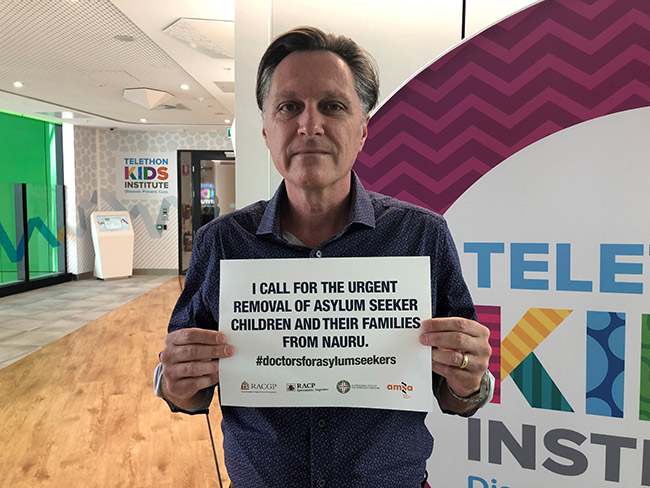
The Kids Research Institute Australia is calling for the immediate removal of all refugee and asylum seeker children and their families from Nauru.
The social and emotional wellbeing of Aboriginal children and young people