
Search
Showing results for "mental health aboriginal"

The Kids Research Institute Australia's Brain Tumour Research team will develop and implement cutting-edge technologies to revolutionise the speed of brain cancer diagnosis for WA children, thanks to more than $200,000 from Telethon.

Kids and families can get their hands dirty at Sunday’s Telethon Family Festival at RAC Arena, with The Kids Research Institute Australia showcasing some of its world-class research.

Discover resources and science activities for kids for the topic 'Meet Superhero Researchers'.
Hannah Moore OAM BSc (Hons) GradDipClinEpi PhD Head, Infectious Diseases Research 08 6319 1427 Hannah.moore@thekids.org.au Head, Infectious Diseases
The aim of the study is the early identification of problems with the current flu vaccines, and providing parents and professionals with up to date information.

New research from the Children’s Diabetes Centre has found a pump that suspends insulin delivery when BGLs fall can halve the incidence of hypoglycaemia.
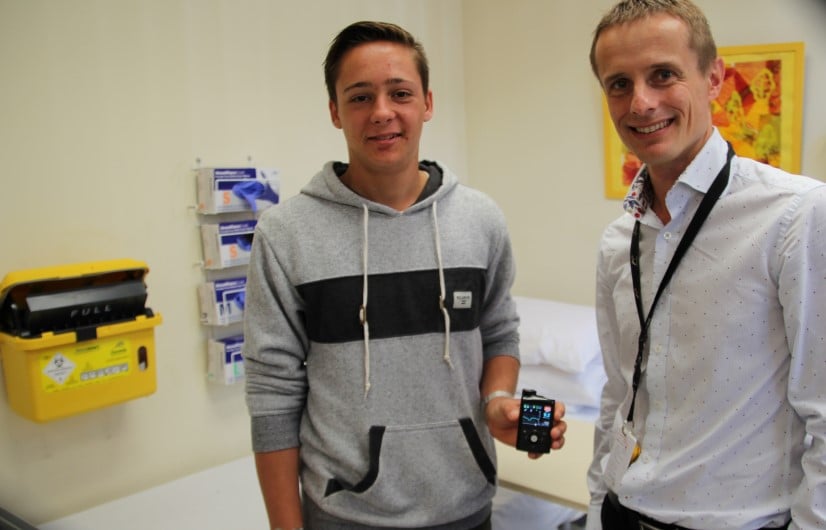
Meet Jake O’Brien, the first patient to take part in the longest and largest at-home trial of a hybrid closed-loop insulin pump.

A comprehensive app produced by The Kids researchers has offered parents a lifeline as they try to cope with the isolation and disruption caused by coronavirus.
ETV6::RUNX1 is one of the most common recurrent genomic abnormalities in acute lymphoblastic leukaemia (ALL) and is associated with a good prognosis. High expression of NTRK1, encoding tropomyosin receptor kinase A (TrkA), confers a poor prognosis in other malignancies and may contribute to therapy resistance in patients with ETV6::RUNX1 B-ALL.
Respiratory oscillometry (or the forced oscillation technique) is a highly practical lung function test that can be applied in a wide range of clinical scenarios in children and adults, including the clinic, intensive care unit, patient home monitoring and emergency departments. Oscillometry measurements complement spirometry in detecting abnormal lung function, measuring effects of treatment such as inhaled corticosteroids or bronchodilators, and changes due to disease activity.