Skip to content

Search

Considerations for Causal Inference Studies

Rachel Foong BSc (hons), PhD, MBiostat Honorary Research Associate 08 6319 1626 Rachel.Foong@thekids.org.au Senior Research Fellow Dr Foong is an

Analysis of risk factors associated with suicidality in children and adolescents with fetal alcohol spectrum disorder in Western Australia

Individuals with fetal alcohol spectrum disorder (FASD) are at an elevated suicide risk compared with those in the general population. This public health issue warrants further research attention to help inform the development of prevention and intervention efforts. Our study is the first to characterize suicidality (i.e., suicidal ideation/suicide attempt) and explore associated risk factors in young individuals with FASD within the Australian context.

Parsing the heterogeneity of social motivation in autism

Social motivation is posited as a key factor in the expression of the autism phenotype. However, lack of precision in both conceptualization and measurement has impeded a thorough understanding of its diverse presentation and associated outcomes. This study addresses this gap by identifying subgroups of autism characterized by deficits in distinct facets of social motivation, relative to normative benchmarks.

The application of environmental health assessment strategies to detect Streptococcus pyogenes in Kimberley school classrooms

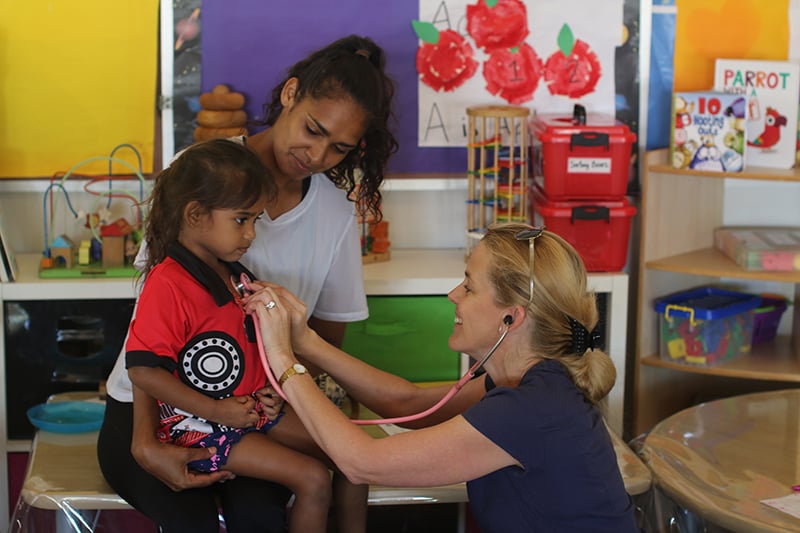
Children spend almost one-third of their waking hours at school. Streptococcus pyogenes (Strep A) is a common childhood bacterial infection that can progress to causing serious disease. We aimed to detect Strep A in classrooms by using environmental settle plates and swabbing of high-touch surfaces in two remote schools in the Kimberley, Western Australia.

Is Systemic Dissemination of BCG Following Neonatal Vaccination Required for Protection Against Mycobacterium tuberculosis?

Tuberculosis (TB) is caused by Mycobacterium tuberculosis (Mtb) and is a leading cause of death. BCG is the only licensed TB vaccine. Preclinical studies have shown that in adults, intravenous administration of BCG improves protection against TB. We hypothesize that intradermal administration of BCG to the human newborn leads to low-grade BCG bacteremia and that this systemic dissemination improves protection against Mtb infection. This hypothesis is based on supporting observations including animal and human studies. It is a testable hypothesis and offers to deliver immediately actionable insight to advance the global efforts against TB.

Restricting outdoor advertising of unhealthy food: can Australia's food category-based classification system be applied consistently?

Most outdoor food advertising (e.g. billboards and bus stops) features foods that are considered unhealthy. The most important technical challenge when designing policies to restrict unhealthy outdoor food advertising is defining 'unhealthy food'. To date, most restriction policies have used nutrient profiling models (i.e. foods are classified according to their nutritional composition) to determine which foods and beverages may be advertised. In Australia, state governments have endorsed a food category-based classification system, with no prescribed nutrient limits, which may create ambiguity when multiple users are identifying food advertisements to be restricted. 

Exercise training to address lifelong consequences of preterm birth: a survey of perceived needs

The identification of a COPD etiotype associated with preterm birth (COPD-developmental) has expedited calls for intervention strategies that may improve health outcomes for survivors of preterm birth (<37 weeks' gestation). Pulmonary-rehabilitation style training interventions achieve physiological and symptom improvement in older people with COPD, but whether similar training interventions are suitable for young people is unclear. We sought to understand the perceived need and requirements of an exercise training intervention for children, adolescents and adults born preterm.

Consultation informs strategies for improving the use of functional evidence in variant classification

When investigating whether a variant identified by diagnostic genetic testing is causal for disease, applied genetics professionals evaluate all available evidence to assign a clinical classification. Functional assays of higher and higher throughput are increasingly being generated and, when appropriate, can provide strong functional evidence for or against pathogenicity in variant classification. Despite functional assay data representing unprecedented value for genomic diagnostics, challenges remain around the application of functional evidence in variant curation.

Combination of curcumin or chitosan with photodynamic therapy as an effective alternative therapy for overcoming wound infection associated with multidrug-resistant Acinetobacter baumannii

The increasing prevalence of multidrug-resistant Acinetobacter baumannii as an opportunistic pathogen in wound infections raises significant concerns due to its antibiotic resistance and biofilm-mediated antibiotic tolerance. This underscores the urgent need to explore an alternative approach to effectively managing wound infections caused by MDR A. baumannii.

Concentration of food allergens in breastmilk and association with maternal factors– A systematic review

Common food allergens have been detected in breast milk with wide inter-individual variations in concentrations. As maternal factors, such as age, smoking, and body mass index have been associated with breast milk composition, we aimed to identify maternal characteristics associated with the concentration of food allergens in breast milk.