
Search
Showing results for "early lung health"
Young people aged 11 years and older provided information on their suicidal ideation, suicide plans and suicide attempts.
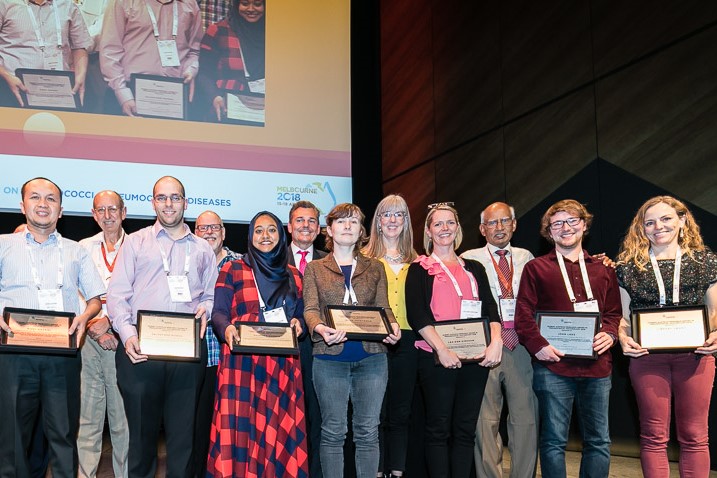
Congratulations to Dr Lea-Ann Kirkham - one of just 10 recipients from around the world to receive a prestigious Robert Austrian Award at the International Symposium on Pneumococci and Pneumococcal Diseases.
The autistic and autism communities have identified improving the quality of life and well-being of autistic people as a key priority. Despite this, to date, there are no evidence-based supports for autistic children which specifically focus on improvements in these areas.
To explore trends in the receipt of commonly prescribed medications (beyond insulin) in people with type 1 diabetes in Australia, including polypharmacy, and to investigate socioeconomic disparities across these trends.
In this review, we provide an overview of food allergy genetics and epigenetics aimed at clinicians and researchers. This includes a brief review of the current understanding of genetic and epigenetic mechanisms, inheritance of food allergy, as well as a discussion of advantages and limitations of the different types of studies in genetic research.
The evidence about the acceptability and effectiveness of innovative paediatric models of care for Type 1 diabetes is limited. To address this gap, we synthesised literature on implemented models of care, model components, outcomes, and determinants of implementation and sustainability.
At present, limited literature exists exploring patient preferences for prophylactic treatment of acute rheumatic fever and rheumatic heart disease. Given low treatment completion rates to this treatment in Australia, where the burden of disease predominantly affects Aboriginal and Torres Strait Islander people, an improved understanding of factors driving patient preference is required to improve outcomes.
Malaria in Lao People's Democratic Republic (Lao PDR) has declined rapidly over the last two decades, from 279,903 to 3926 (99%) cases between 2001 and 2021. Elimination of human malaria is an achievable goal and limited resources need to be targeted at remaining hotspots of transmission.
To determine the clinical outcomes and evaluate the perspectives of children with Type 1 diabetes (T1D) and their parents managing their child on hybrid closed-loop (HCL) therapy.
There remains a general misconception that the immune status of the fetus and neonate is immature or insufficient. However, emerging research in immune ontogeny prompts reconsideration of this orthodoxy, reframing this period instead as one of unique opportunity. Vaccine responses (qualitative and quantitative) vary between individuals, and across demographic cohorts. Elements of baseline immune status and function predict vaccine response - some of these factors are well described, others remain a subject of ongoing research, especially with the rapidly expanding field of 'omics' research, enabled by development of highly granular immune profiling techniques and increasing computational capacity.