
Search
Showing results for "early lung health"

New mothers in Perth are teaming up with researchers at The Kids Research Institute Australia in a global bid to develop the first vaccine to prevent Respiratory Syncytial Virus (RSV) disease.
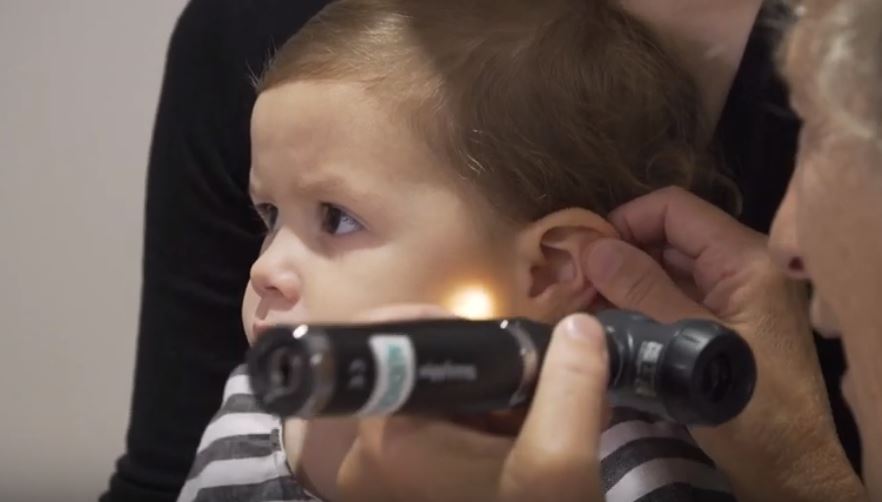
Researchers from The Kids Research Institute Australia have identified the main bacteria responsible for recurrent ear infections and repeat ear surgeries in children.
The Wesfarmers Centre is pleased to announce the 4 successful applications for the 2016 Round 1 Wesfarmers Centre Seed Funding.
Our objective was to examine influenza vaccine safety in Australian children aged under 10 years in 2013.
It is now well accepted that germline or de novo genetic alterations predispose to cancer development, especially during childhood. Among them, constitutive trisomy 21, also known as Down syndrome (DS), has been shown to predispose to acute leukemia affecting both the myeloid (ML-DS) and lymphoid (DS-ALL) lineages. ML-DS is associated with a good prognosis compared to children without DS, due in part to a higher sensitivity to conventional chemotherapy.
Copy number alterations (CNAs), resulting from the gain or loss of genetic material from as little as 50 base pairs or as big as entire chromosome(s), have been associated with many congenital diseases, de novo syndromes and cancer. It is established that CNAs disturb the dosage of genomic regions including enhancers/promoters, long non-coding RNA and gene(s) among others, ultimately leading to an altered balance of key cellular functions.
Allogeneic hematopoietic stem cell transplant (HSCT) is a proven curative therapy for children with high-risk myeloid malignancies. Disease relapse, transplant-related mortality and graft versus host disease (GvHD) are the main causes of treatment failure and death post-transplant. The optimum pretransplant conditioning regimen is yet to be defined. There is limited data regarding the use of busulfan, fludarabine and melphalan as a myeloablative conditioning regimen in children receiving HSCT for myeloid malignancies.
In recent decades, the conduct of uniform prospective clinical trials has led to improved remission rates and survival for patients with acute myeloid leukaemia and acute lymphoblastic leukaemia. However, high-risk patients continue to have inferior outcomes, where chemoresistance and relapse are common due to the survival mechanisms utilised by leukaemic cells.
The gut microbiome is a well-recognized modulator of host immunity, and its compositions differ between geographically separated human populations. Systemic innate immune responses to microbial derivatives also differ between geographically distinct human populations. However, the potential role of the microbiome in mediating geographically varied immune responses is unexplored. We here applied 16S amplicon sequencing to profile the stool microbiome and, in parallel, measured whole-blood innate immune cytokine responses to several pattern recognition receptor (PRR) agonists among 2-year-old children across biogeographically diverse settings. Microbiomes differed mainly between high- and low-resource environments and were not strongly associated with other demographic factors. We found strong correlations between responses to Toll-like receptor 2 (TLR2) and relative abundances of Bacteroides and Prevotella populations, shared among Canadian and Ecuadorean children.
Vaccination remains one of the most effective means of reducing the burden of infectious diseases globally. Improving our understanding of the molecular basis for effective vaccine response is of paramount importance if we are to ensure the success of future vaccine development efforts. We applied cutting edge multi-omics approaches to extensively characterize temporal molecular responses following vaccination with hepatitis B virus (HBV) vaccine. Data were integrated across cellular, epigenomic, transcriptomic, proteomic, and fecal microbiome profiles, and correlated to final HBV antibody titres.