
Search
Showing results for "early lung health"
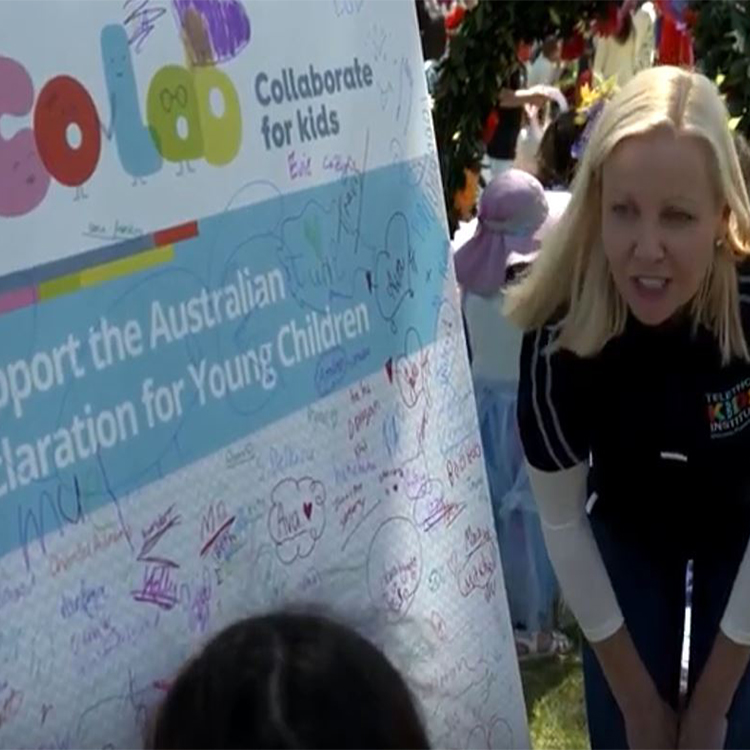
More than 100 leading Australian stakeholders with early childhood expertise were invited to work with CoLab to develop the first Australian EC Declaration.
In 2021 the South Australian Department for Education commissioned The Kids Research Institute Australia to undertake a review of the Hearing Impairment Support Program (HISP).
We explored childcare educators’ perceived barriers and facilitators to policy implementation in order to inform the development and implementation of an early childhood education and care (ECEC) specific physical activity policy. This study was part of the Play Active (2019-2023) project which aimed to develop, implement and evaluate evidence-based physical activity policy to improve physical activity levels in children attending ECEC.
Asthma affects > 10% of children in Australia and New Zealand (NZ), with up to 5% of those having severe disease, presenting a management challenge. We aimed to survey tertiary paediatric respiratory services across Australia and NZ using a custom-designed questionnaire, to conduct a cross-sectional observational study of the numbers of children with problematic severe asthma seen, the number treated with biologic therapy, outpatient clinic/multidisciplinary team services available, investigations and tools routinely used and approaches utilised for transition to adult care.
We have developed a PCR-high-resolution melt (PCR-HRM) assay to discriminate nontypeable Haemophilus influenzae (NTHi) colonies from Haemophilus haemolyticus
Histo-blood group antigens (HBGAs) may influence immune responses to rotavirus vaccination.
Otitis media (OM), or middle ear infection, is one of the most common childhood illnesses globally. In Australia, OM remains a leading cause of antibiotic prescriptions in children, despite growing awareness of antimicrobial resistance (AMR) and the need for stewardship. Preventing OM not only reduces the burden of disease but also plays a critical role in curbing unnecessary antibiotic use and slowing the rise of AMR.

PhD Candidate
This evaluation examines a range of indicators concerning student and community outcomes over a seven-year operational period from 2015 to 2021, as well as the satisfaction of parents and carers.
Independent review of the Let’s Read literacy support program in South Australia and how it fits within the mix of services in South Australia that support the development of children’s emergent literacy