
Search
Showing results for "early lung health"

Amanda is a Certified Child Life Specialist and has a Bachelor of Science in Psychology and Master of Arts in Education with an emphasis on Child Life in Hospitals and Early Childhood Education.
Government early intervention services for children with intellectual disability (ID) in Western Australia have adopted the model of family-centred care.
We are studying immune cells from identical twins of which one suffers and one does not suffer from allergic disease to identify specific mechanisms that may play important roles in disease development.
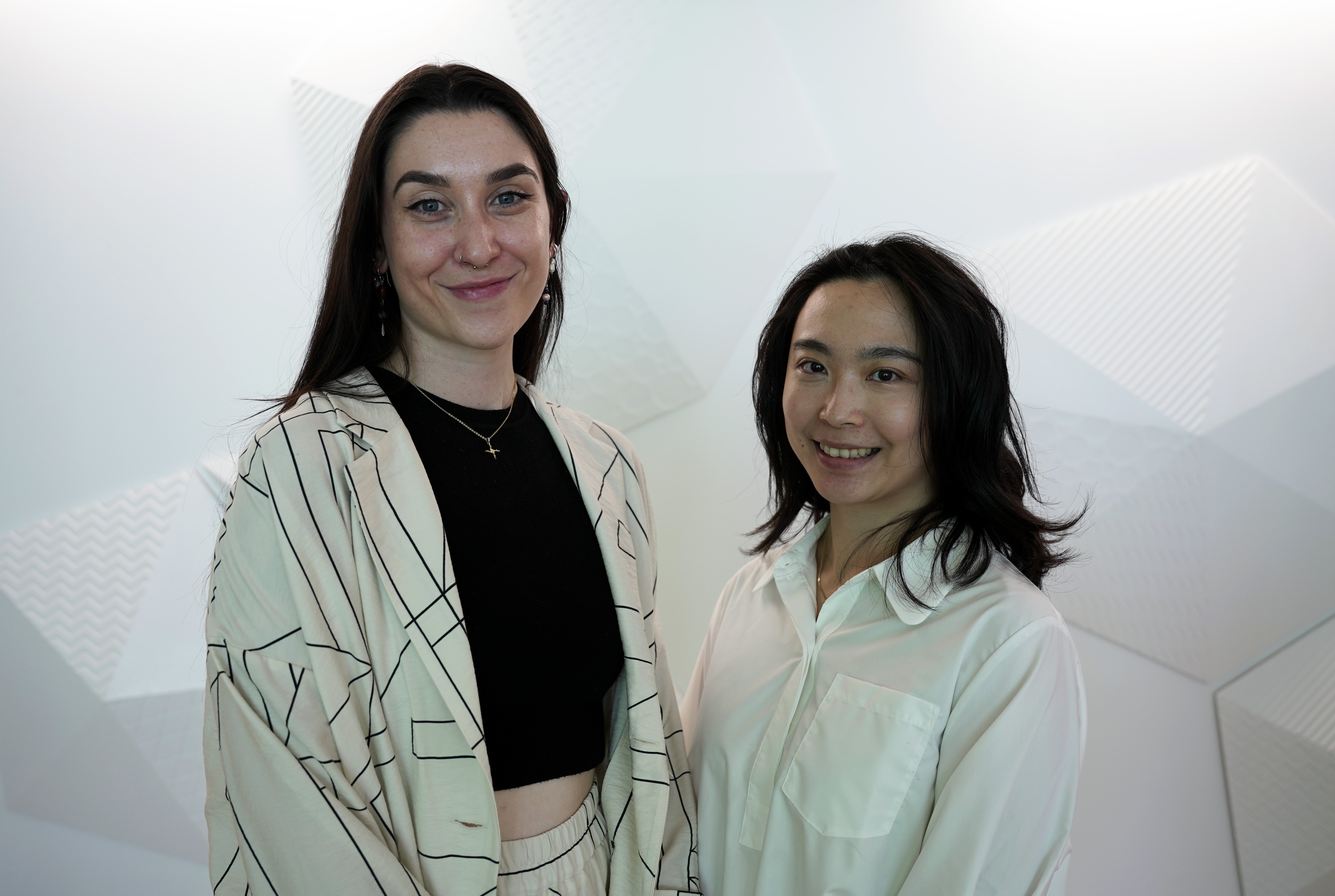
Embrace 2023 Research Award winners Zoe Waters and Pulan Bai.
Physical constraints of small apartment kitchens and the influence of the surrounding community food environment may impact food practices of apartment residents. Social media portrayal of these features may influence public perception of apartment living.
The majority of children acquire language effortlessly but approximately 10% of all children find it difficult especially in the early or preschool years with consequences for many aspects of their subsequent development and experience: literacy, social skills, educational qualifications, mental health and employment.

Patron
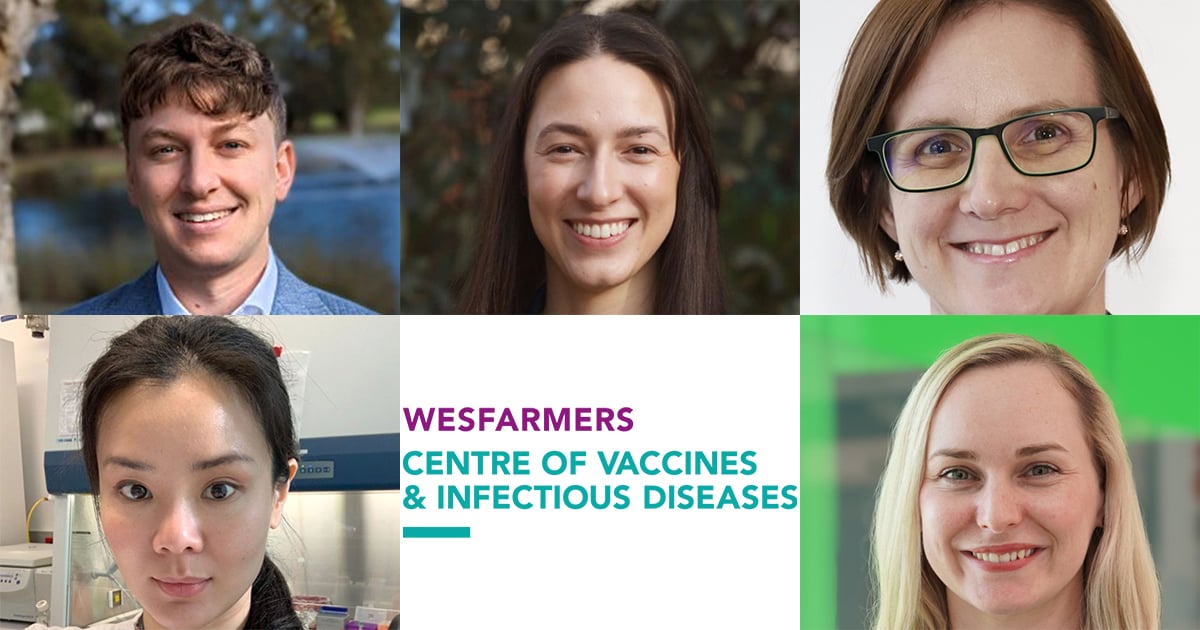
Congratulations to Alec Truswell, Tamara Veselinović, Anastasia Phillips, and Wenna Lee for being awarded Seed Funding through the Wesfarmers Centre of Vaccines & Infectious Diseases, each valued at up to $25,000, and to Sonia McAlister, the recipient of the 2026 Riley Hughes Memorial Award in Pertussis Research.
This study highlights a range of unique profiles that can be used for improving the early development of young Aboriginal children
To characterise small-area geographical variation in the prevalence of diabetes in Australian youth. A combined statistical reconstruction and small-area estimation algorithm was applied to privacy-modulated data from the 2021 Australian Census.