
Search
Showing results for "early lung health"
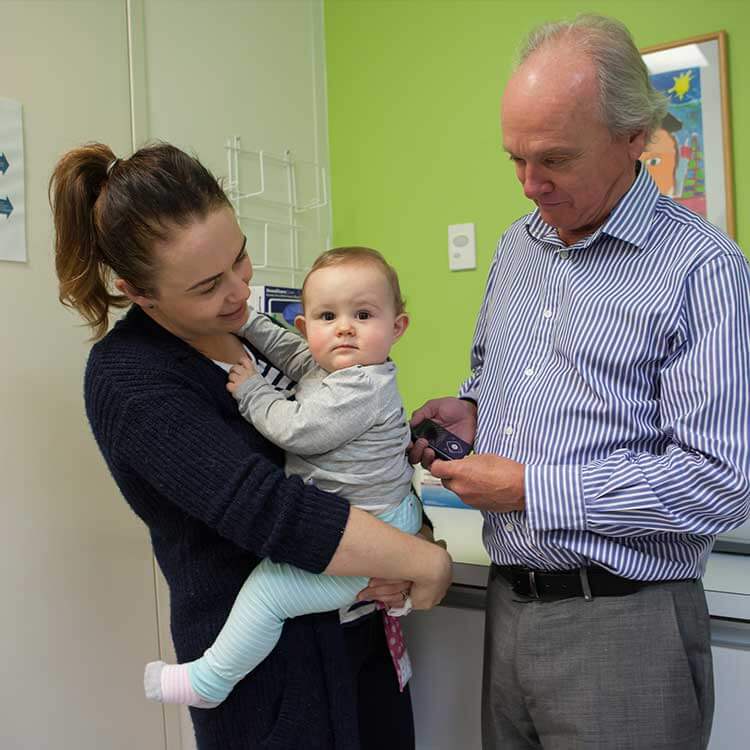
The Children's Diabetes Centre's research into Type 1 diabetes, childhood onset Type 2 diabetes and obesity aims to improve the lives of children and adolescents affected by these conditions.
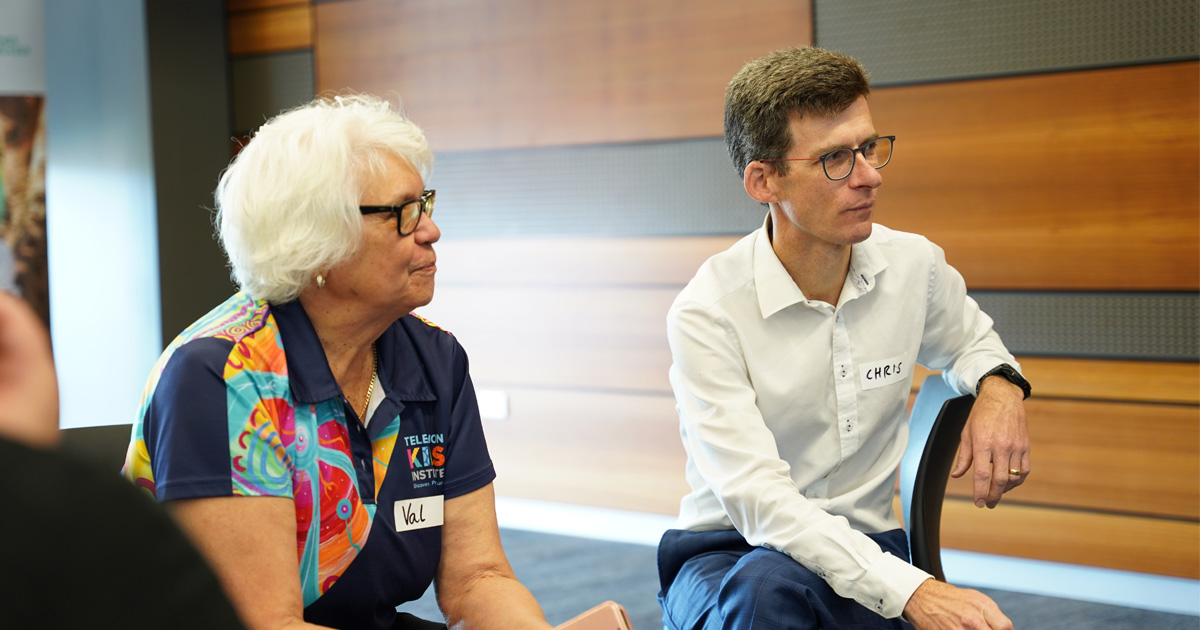
Researchers from the Wesfarmers Centre of Vaccines and Infectious Diseases at The Kids Research Institute Australia have shared their expertise with the community in Cockburn, covering topics ranging from respiratory disease in babies to recurring ear infections in kids.
Individuals with Prader-Willi syndrome (PWS) often have excessive daytime sleepiness and emotional/behavioral disturbances. The objective of this study was to examine whether daytime sleepiness was associated with these emotional/behavioral problems, independent of nighttime sleep-disordered breathing, or the duration of sleep.
We evaluated family satisfaction following spinal fusion in girls with Rett syndrome
Families participating in the population-based and longitudinal Australian Rett Syndrome Database whose daughter had undergone spinal fusion provided data on...
Kaal is a proud Noongar boy, he loves playing football, but this season Kaal is about to tackle a new and unexpected challenge… eczema.
A severe neurodevelopmental disorder mostly affecting girls.
We have recently published a paper identifying precursor populations in peripheral lung (2017), and have also discovered that these populations can be found in multiple tissues.
Pseudomonas aeruginosa infections in the lungs affect millions of children and adults worldwide. To our knowledge, no clinically validated prognostic biomarkers for chronic pulmonary P. aeruginosa infections exist. Therefore, this study aims to identify potential prognostic markers for chronic P. aeruginosa biofilm lung infections.
Wall teichoic acid may be important for protecting S. aureus against exposure to bile